Potable water tank coating application must protect the steel while preventing contamination, odor, taste, and unsafe water contact. Success depends on documented product approval, confined-space planning, surface preparation, stripe coating, film-thickness control, full curing, holiday inspection, disinfection, and acceptance testing.
This page covers the application process only. Compare lining technologies in the potable water tank coating types guide, and review approvals and hygiene controls in the potable water tank safety guide.
Potable Water Tank Coating Process at a Glance
- Confirm the approved coating system and acceptance criteria.
- Isolate, drain, clean, and make the tank safe for entry.
- Repair steel, welds, edges, pits, and drainage defects.
- Remove oil, salts, rust, old coating, abrasive, and dust.
- Verify cleanliness, profile, salts, climate, and ventilation.
- Apply stripe coats and full coats at the specified DFT.
- Control recoat windows and cure under continuous ventilation.
- Inspect DFT, holidays, adhesion where required, and repairs.
- Disinfect, flush, test water quality, and release the tank.
1. Approve the System Before Work Starts
Gather the current TDS, SDS, potable-water certificate, coating specification, method statement, inspection and test plan, confined-space permit, ventilation plan, and repair procedure. Confirm that approval covers the exact product, color, thickness, cure schedule, substrate, and intended water-contact conditions.
Define hold points for surface preparation, salt testing, stripe coats, each full coat, DFT, holiday testing, cure, disinfection, and final water-quality acceptance.
2. Isolate and Clean the Tank
Drain and physically isolate the tank from the potable-water system. Remove sediment, scale, slime, oil, and residues. Cleaning methods must not leave detergents or contaminants that interfere with coating adhesion or drinking-water safety.
Confined-space entry requires trained personnel, atmospheric testing, forced ventilation, rescue arrangements, communication, lighting, and suitable personal protective equipment. Follow the vessel, yard, owner, and legal requirements.
3. Repair Steel and Tank Geometry
Before blasting, repair active leaks, severe pitting, cracked welds, sharp edges, inaccessible crevices, and water traps. Smooth weld spatter and round edges where specified. Coating cannot compensate for defective steel or geometry that prevents drainage and cleaning.
4. Surface Preparation
Degrease before abrasive blasting. Steel potable-water tanks commonly require abrasive blasting to the specified standard, often Sa 2.5 or an equivalent, with a profile matched to the lining. The exact requirement comes from the coating specification and TDS.
- Use clean, dry compressed air and approved abrasive.
- Measure soluble salts where contamination is possible.
- Remove dust and spent abrasive from corners, stiffeners, and overhead areas.
- Inspect the full surface under adequate lighting.
- Prime within the permitted period before flash rust or contamination occurs.
5. Control Climate and Ventilation
Measure air temperature, steel temperature, relative humidity, and dew point throughout preparation, application, and cure. Maintain the specified dew-point margin and product temperature. Tank steel can remain colder than outside air, creating hidden condensation.
Ventilation must supply clean air, remove solvent or reaction products, prevent explosive or hazardous atmospheres, and support uniform curing. Airflow should not deposit dust or cause uncontrolled dry spray.
6. Mix the Coating Correctly
Premix components, combine them at the exact stated ratio, and mix until uniform. Observe induction time and pot life. Do not split kits by eye or add unapproved thinner. Record batch numbers, mixing time, temperature, thinner quantity, and discard time.
For solvent-free or plural-component products, control material temperature, hose conditions, pressure, ratio checks, and spray interruptions according to the equipment and product instructions.
7. Apply Stripe Coats
Stripe-coat welds, edges, bolts, brackets, cut-outs, pits, and other difficult geometry before or between full coats as specified. Work the material into the surface without leaving runs, air bubbles, or excessive localized thickness.
8. Apply Full Coats and Measure Film Thickness
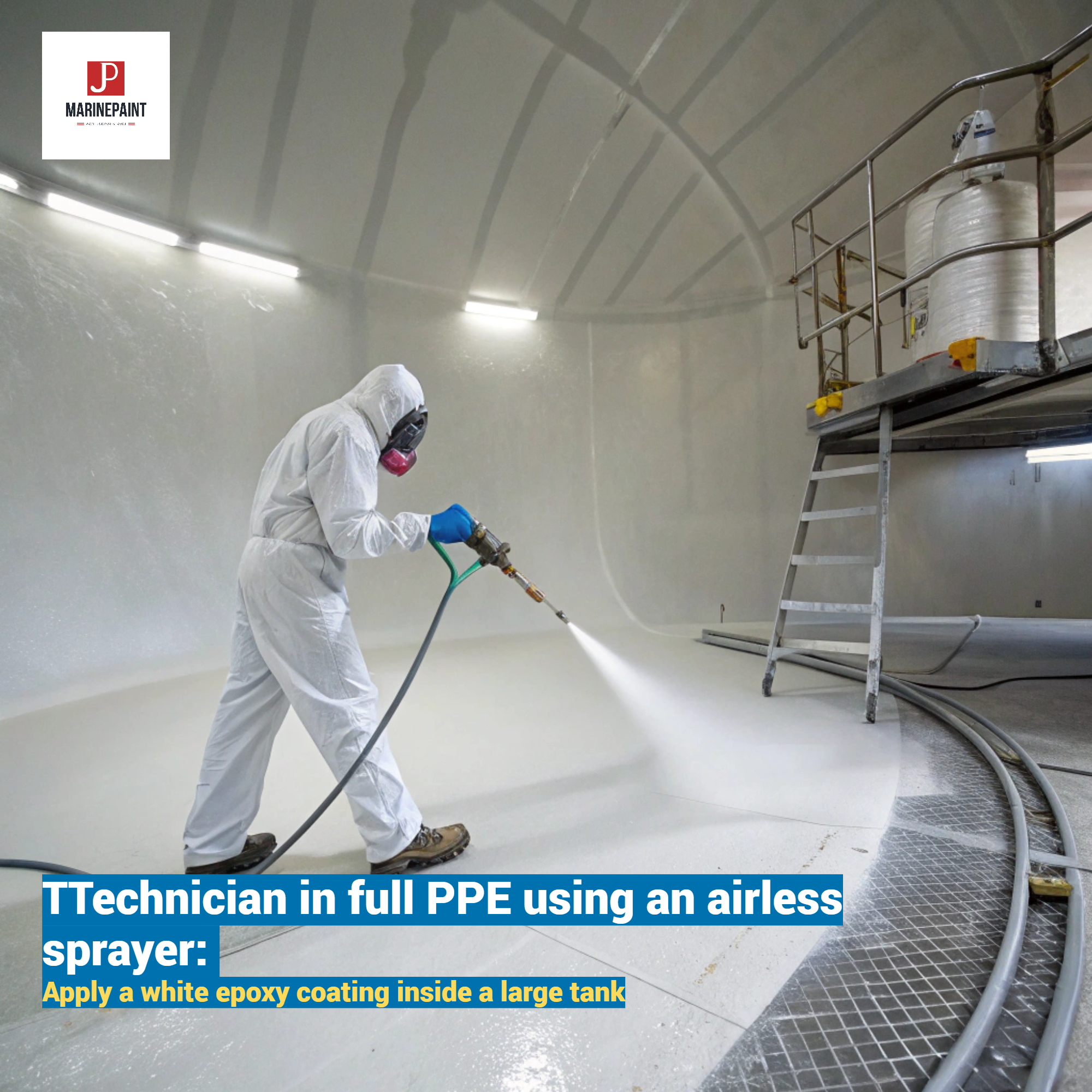
Use the approved brush, roller, conventional spray, airless spray, or plural-component equipment. Apply uniform overlapping passes and continuously check wet-film thickness. Track material consumption by tank area and coat.
| Control | Why it matters |
|---|---|
| Wet-film thickness | Provides immediate feedback before the film cures |
| Dry-film thickness | Confirms the protective lining meets specification |
| Maximum local thickness | Reduces solvent entrapment, sagging, cracking, and cure problems |
| Recoat interval | Supports intercoat adhesion and complete curing |
| Material consumption | Identifies unexpected low build, waste, or missed areas |
9. Inspect Between Coats
Before overcoating, inspect for amine blush, contamination, pinholes, runs, dry spray, missed areas, and damage. Remove contamination and prepare cured surfaces as directed when the maximum recoat interval is exceeded. Record all repairs.
10. Cure Before Water Contact
Cure time depends on product, film thickness, steel temperature, ventilation, and humidity. The surface feeling dry is not proof of full chemical cure. Maintain environmental and ventilation conditions for the full period stated for potable-water service.
Do not accelerate filling because of schedule pressure. Early water contact can produce odor, taste, soft film, discoloration, blistering, extractables, and coating failure.
11. Final Inspection and Holiday Testing
Measure DFT after full cure and map low and high areas. Perform holiday or pinhole testing when specified, using equipment and voltage appropriate for the lining thickness. Repair defects with the approved material and repeat inspection after cure.
Adhesion, cure, solvent-rub, hardness, or other tests may be required by the specification. Testing methods and acceptance criteria must be agreed before application.
12. Disinfect, Flush, and Release the Tank
After the coating passes inspection and cure requirements, remove equipment and debris, clean the tank, disinfect it using the approved method, and flush until acceptance criteria are met. Test water quality as required before reconnecting the tank to service.
The release package should include batch records, environmental logs, surface-preparation and salt results, WFT and DFT records, holiday-test results, repair records, cure confirmation, disinfection, and water-quality acceptance.
Common Application Failures
| Problem | Likely causes | Response |
|---|---|---|
| Pinholes | Air release, porous surface, high film build, poor spray technique | Identify extent, prepare, repair, cure, and retest |
| Soft or odorous film | Wrong mix ratio, low temperature, poor ventilation, early filling | Stop release, investigate cure, remove defective coating if necessary |
| Rust staining | Missed area, low DFT, salt contamination, flash rust, edge failure | Remove to sound prepared steel and rebuild the approved system |
| Intercoat peeling | Contamination, missed recoat window, blush, incompatible coating | Remove weak layers, clean and abrade, then reapply under approved procedure |
| Blisters after filling | Salts, moisture, retained solvent, undercure, osmotic pressure | Drain, document, investigate representative blisters, and repair the root cause |
Application Checklist
- Approved product, certificate, TDS, SDS, and method statement on site.
- Confined-space permit, gas testing, ventilation, rescue, and PPE ready.
- Steel repairs and surface preparation accepted.
- Salt, dust, profile, temperature, humidity, and dew point recorded.
- Mix ratio, pot life, batches, thinner, WFT, DFT, and recoat times recorded.
- Stripe coats, holidays, repairs, cure, disinfection, and water tests accepted.
For product and document inquiries, review JDH912 Epoxy Potable Water Tank Coating. For a complete project recommendation, use the potable water tank coating solution or send the tank details through the contact form.