What does orange peel mean on a marine finish?
Orange peel paint has an uneven, pebbled surface rather than the intended level finish. On marine topcoats, investigate how the coating was applied and how it formed its film, then assess appearance against the agreed finish requirement. Texture alone cannot establish thickness, adhesion, cure or corrosion protection. Identify the affected area and obtain product-specific direction before changing spray settings, adding thinner or preparing a repair.
PPG's description of orange peel provides a useful visual definition in an automotive refinishing context. The term describes appearance; it is not a marine acceptance grade. A ship's superstructure panel needs a decision based on its own coating system, specification and inspection evidence.
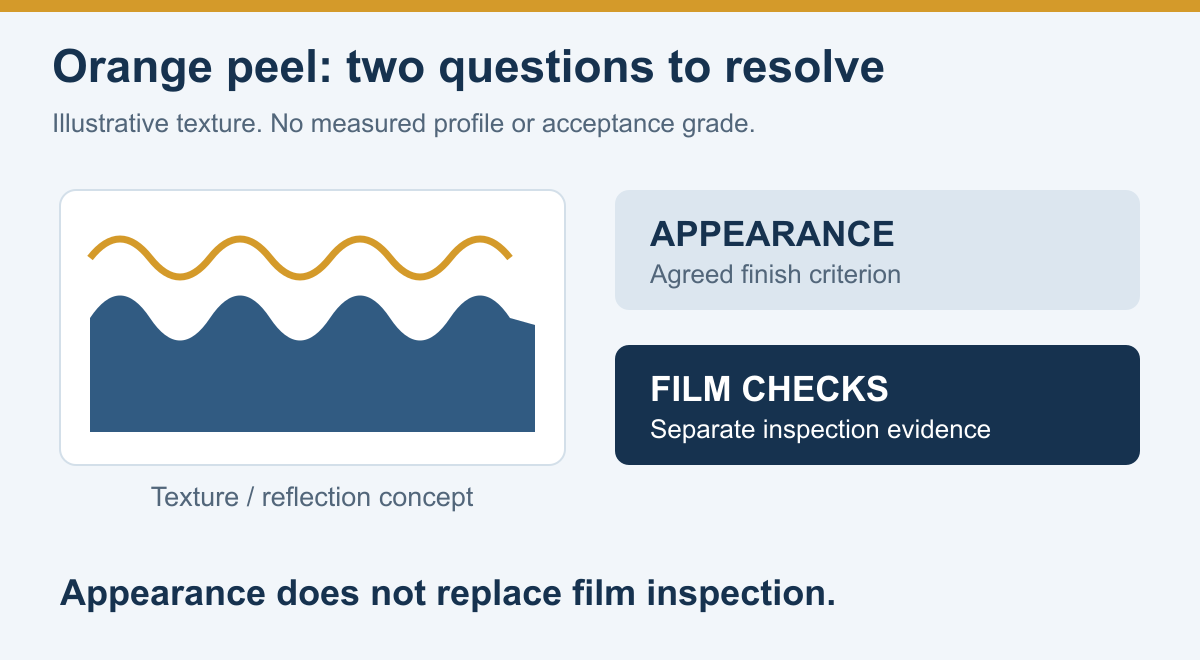
Original texture concept, not to scale. This diagram is not a project photograph, measured surface profile or approved finish comparison panel.
Describe the texture under repeatable viewing conditions
Start by locating the affected panel on a drawing or inspection map. Record whether the texture is isolated, follows pass boundaries or extends across the whole application area. Keep a wide view alongside close photographs, and state the lighting, viewing direction and stage of drying. Reflections can make a surface look different when the observer moves; preserve the comparison conditions rather than relying on one attractive or unfavorable camera angle.
Use the agreed appearance reference where the project has one. Identify the approved sample or finish criterion and its revision. An internet defect photograph, this article's diagram or an unapproved offcut cannot supply an acceptance threshold.
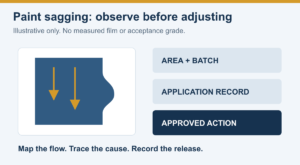
Distinguish the observed pebbled texture from directional runs, isolated particles, craters or pinholes. Several observations may occur together. Record them separately instead of deciding that every rough-looking surface has the same cause. The Paint Sagging investigation guide addresses downward flow; it should not replace a texture assessment.
Reconstruct application and film-formation history
Check the equipment context before interpreting a setting
Graco's air-assisted spray troubleshooting guidance includes heavy coverage and atomization air among possible contributors to orange peel for that equipment type. It illustrates why the gun, tip and operating arrangement belong in the record. It does not establish a universal pressure adjustment for airless spray, a roller-applied finish or any JD product.
Identify the actual application method, equipment and measured setting locations. Compare them with the applicable equipment instructions and topcoat requirements. A pressure value without its unit or measurement point is insufficient for a meaningful comparison. Review the recorded technique and pass sequence alongside the setup, not as an assumed explanation after the event.
Examine the conditions during leveling and drying
Hempel's hot-climate guideline describes uneven film formation and poorly blended overlaps when chemically curing paints dry too rapidly in elevated-temperature conditions. This makes the drying history a relevant investigation route. Its temperature values and product recommendations are not JD operating limits.
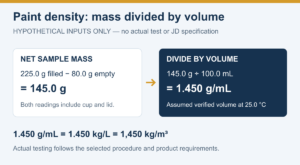
Retain air, substrate and material temperatures separately, together with times, locations, relevant ventilation/exposure observations and interruptions. Report temperature in °C or °F consistently. Review product preparation, actual additions and elapsed batch times against the specified instructions. If viscosity was measured, keep its method and temperature with the result; the viscosity measurement article covers that separate task.
The matrix below organizes questions. It neither confirms a cause nor authorizes an adjustment.
| Evidence pattern | Investigation question | Information that makes the comparison useful |
|---|---|---|
| Texture concentrated at pass boundaries | Did application or blending differ there? | Pass sequence, zone photographs and application times |
| Texture changes during the shift | Did material, surface or drying conditions change? | Time-linked conditions and batch-use history |
| Texture appears with one equipment setup | Was the setup appropriate and operating as intended? | Gun/tip IDs, condition checks, settings and measurement points |
| A material addition preceded the observation | Was that addition permitted and correctly recorded? | Exact product, addition identity/quantity and authorizing instruction |
| Earlier-layer texture may be visible | What was the underlying surface like before topcoating? | Previous-stage inspection and preparation records |
Keep unsupported explanations open until the evidence resolves them. Do not reduce the inquiry to “increase pressure” or “thin more.” A proposed change must fit both the equipment and coating instructions, and equipment work must follow the relevant safety procedures.
Assess appearance and protective-film requirements separately
The JD polyurethane application and recoat guide, revision 2026.07, treats appearance, film thickness, gloss, color, curing and recoat condition as inspection topics. It is a planning summary and defers final application data to the current official TDS.
Use separate evidence for the questions below. A favorable result in one column does not fill a gap in another.
| Review question | Appropriate evidence to obtain | What the texture observation cannot establish |
|---|---|---|
| Does the appearance meet the agreed finish? | Specified viewing conditions and identified comparison/criterion | A universal acceptable texture size or visual grade |
| Is the required film build present? | Location-linked thickness results under the selected procedure | Minimum local thickness from a photograph |
| Are cure and service-release conditions met? | Product/system requirements and relevant completion records | Readiness from gloss or apparent smoothness |
| Are other specified checks complete? | Applicable adhesion, continuity or other inspection records | Results for tests that were not performed |
The dry-film thickness guide explains measurement planning without treating an appearance judgment as a reading. Keep the original inspection locations available if a surface treatment or replacement coat is proposed.
Agree the disposition before polishing, sanding or recoating
An automotive polishing recipe should not become an unreviewed marine repair procedure. Establish whether the observed finish meets the project criterion, whether another inspection concern remains, and what treatment the exact product permits. A smoother appearance after material removal does not demonstrate the remaining film build.
Where correction is required, obtain a documented treatment and reinspection plan for the identified area. If a representative trial is authorized, define the question, retained baseline and review criteria before starting it. Keep trial evidence distinct from acceptance of the vessel area. Record the material condition and relevant preparation restrictions rather than assigning a generic waiting period or abrasive grade.
| Disposition step | Define before proceeding | Retain at handover |
|---|---|---|
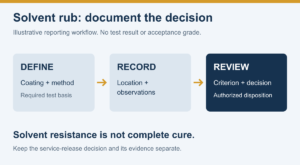
| Appearance review | Criterion, viewing arrangement and decision authority | Area/reference IDs and recorded decision |
| Proposed treatment | Permitted method, product condition and preparation limits | Applicable technical instruction and treatment boundary |
| Additional coating, if needed | Compatible sequence and applicable timing | Application record and confirmed recoat basis |
| Final review | Required appearance and protective-film checks after treatment | Results, unresolved exceptions and release decision |
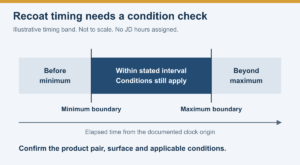
For an additional layer, check the recoat-window requirements of the actual product pair. A repair can change the surface and timing basis; the original topcoat schedule should not be assumed to remain sufficient.
Resolve the exact JD topcoat documents
Use the marine polyurethane range to identify the proposed finish and its underlying system. Confirm that every controlled document actually names the selected product before using its data. Obtain the latest TDS, relevant component/thinner SDS and the applicable project finish and repair requirements.
This article supplies no JD thinner percentage, spray pressure, nozzle choice, allowable texture measurement or repair time. When a required product instruction is missing, retain the decision for technical clarification rather than substituting a setting from another brand or coating.
Frequently asked questions
Is orange peel the same defect as sagging?
No. Orange peel describes an uneven surface texture; sagging describes downward flow. They may coexist, so identify each observation and investigate the relevant records rather than merging them into one presumed cause.
Does orange peel automatically mean the coating will fail?
An appearance observation does not establish service performance. Evaluate the specified finish criterion and the separate protective-film requirements. Retain any missing inspection evidence instead of declaring either failure or acceptance from the texture alone.
Can adding thinner guarantee a smoother marine topcoat?
No universal correction follows from the appearance. Resolve the actual material, equipment, application and drying conditions first. Any addition must be allowed for the selected product and recorded under its instructions.
Request a marine finish review
Resolving a pebbled finish on a superstructure or hull topside before handover? Send JD Marine Paint an inquiry with the exact topcoat/system, mapped photographs, agreed finish reference, application and drying history, available thickness records and proposed treatment. Identify missing documents and the next planned operation so the review can address appearance and protective-film requirements together.