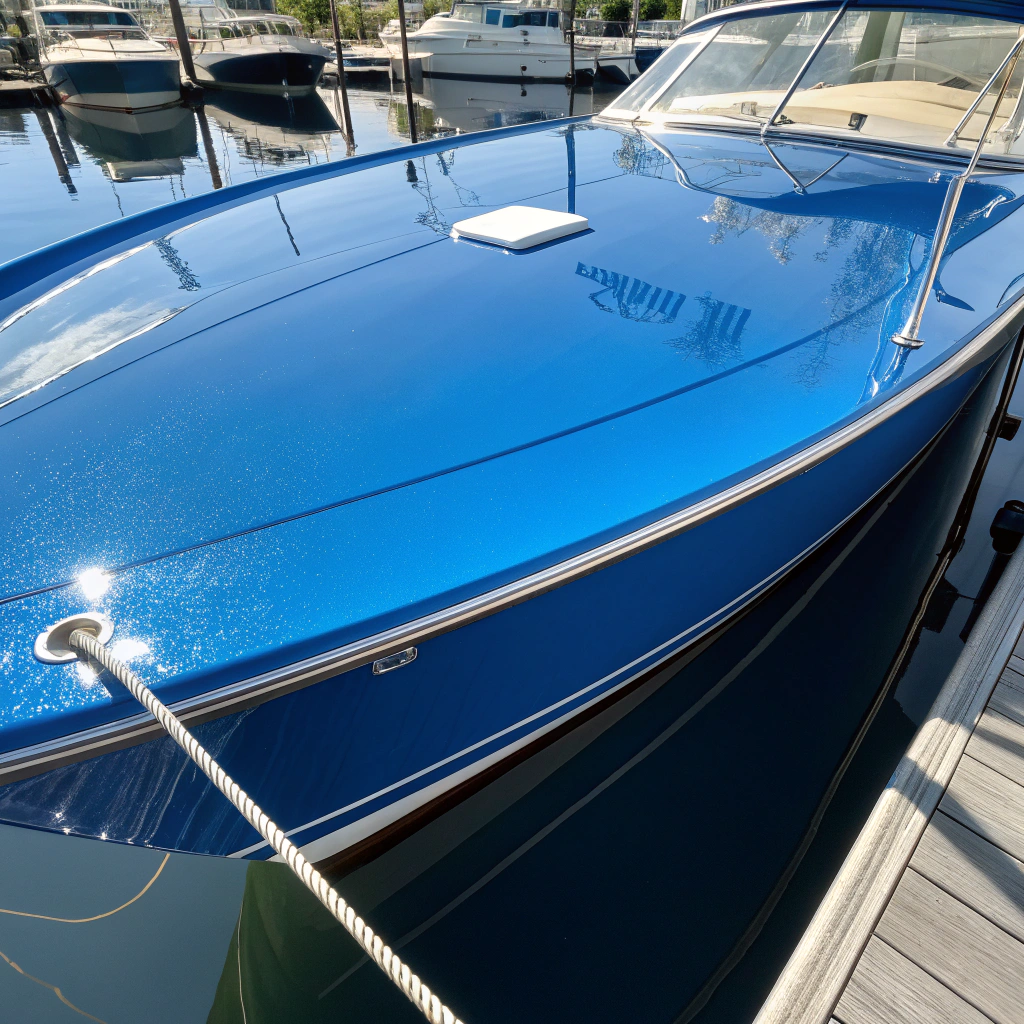
Polyurethane marine paint is a high-performance finish coating used on hull topsides, decks, superstructures, machinery, and other surfaces exposed to sunlight, salt spray, abrasion, and cleaning chemicals. Its main role is to provide durable color, gloss retention, weather resistance, and an easy-to-clean finish above the waterline.
For most professional marine systems, polyurethane is the visible topcoat rather than the complete corrosion-protection system. The substrate is prepared and protected with a compatible primer or epoxy intermediate coat, then finished with polyurethane. Final product selection, film build, recoat interval, and application conditions should always be confirmed against the latest technical data sheet.

What Is Polyurethane Marine Paint?
Polyurethane paint cures into a dense, hard-wearing film with strong resistance to ultraviolet exposure, weathering, abrasion, oils, and many service chemicals. In marine use, it is commonly specified as the final coat over an epoxy primer or epoxy intermediate layer.
This division of work matters. Epoxy coatings are generally selected for adhesion, barrier protection, and corrosion resistance, while polyurethane topcoats are selected for exterior durability, appearance, and UV stability. They are usually complementary layers, not interchangeable alternatives.
Where Is Polyurethane Marine Paint Used?
- Hull topsides: color, gloss, UV resistance, and easier cleaning above the waterline.
- Decks and walkways: weather and abrasion resistance, often with an approved anti-slip aggregate.
- Superstructures: long-term color retention on exposed steel and aluminum structures.
- Machinery and equipment: resistance to routine cleaning, oils, and service wear.
- Industrial coastal assets: a weather-resistant finish over a compatible anti-corrosion system.
Polyurethane topcoats are generally not intended to replace dedicated immersion coatings or antifouling paint below the waterline. For underwater hull areas, use an approved epoxy barrier and antifouling system.
One-Part vs Two-Part Polyurethane Marine Paint
| System | Main advantages | Typical use | Key consideration |
|---|---|---|---|
| One-part polyurethane | Easier application and repair; no separate hardener | Smaller maintenance jobs and less demanding service | Usually lower chemical and abrasion resistance than a professional two-part system |
| Two-part polyurethane | Higher hardness, gloss retention, chemical resistance, and exterior durability | Commercial vessels, shipyards, offshore assets, and high-performance topsides | Requires accurate mixing, controlled application, ventilation, and strict recoat timing |
| Acrylic polyurethane | Strong color and gloss retention with good non-yellowing performance | Exterior hull, deck, and superstructure finish coats | Compatibility with the primer and service environment must be confirmed |
For professional marine projects, a two-component acrylic polyurethane is often preferred where long-term appearance and weather resistance are important. JD Marine Paint options include JD908 Acrylic Polyurethane Topcoat and JD918 Acrylic Polyurethane Hull Paint.
Key Benefits of Marine Polyurethane Coatings
UV and Weather Resistance
Polyurethane topcoats retain color and gloss better than unprotected epoxy coatings in exterior service. This makes them suitable for surfaces exposed to continuous sunlight, salt spray, and changing weather.
Abrasion and Impact Resistance
A correctly cured polyurethane film withstands routine handling, cleaning, and mechanical wear. For decks and high-traffic areas, the complete system and anti-slip requirement should be specified according to the actual service condition.
Chemical and Stain Resistance
Marine polyurethane finishes offer useful resistance to oils, fuels, detergents, and atmospheric contaminants. Exact resistance varies by formulation, exposure time, temperature, and chemical concentration, so the product resistance data should be checked before specification.
Gloss and Color Retention
High-quality polyurethane provides a smooth, professional finish and helps reduce chalking and premature fading. Appearance depends on surface preparation, application method, wet-film control, and curing conditions as much as on the coating itself.

Polyurethane vs Epoxy vs Alkyd Marine Paint
| Coating type | Primary strength | Common system role | Main limitation |
|---|---|---|---|
| Epoxy | Adhesion, corrosion protection, water and chemical resistance | Primer, intermediate coat, barrier coat, tank lining | Can chalk under UV exposure without a suitable topcoat |
| Polyurethane | UV resistance, color retention, gloss, abrasion resistance | Exterior finish coat above the waterline | Requires a compatible prepared substrate and is not a substitute for antifouling paint |
| Alkyd | Simple application, repairability, and economy | General maintenance and less demanding topside service | Typically lower long-term chemical and weather resistance |
For a more detailed system comparison, read Epoxy vs Polyurethane Marine Paint. That guide focuses on choosing the correct layer and coating system; this page focuses specifically on polyurethane marine paint.
How to Select the Right Polyurethane Marine Paint
- Define the service area. Confirm whether the surface is a topside, deck, superstructure, equipment item, or another exposed area.
- Identify the substrate. Steel, aluminum, galvanized steel, fiberglass, and existing coatings require different preparation and primer strategies.
- Confirm the existing coating. Unknown or incompatible old coatings may need removal, adhesion testing, or an approved tie coat.
- Set the performance target. Consider UV exposure, abrasion, chemicals, desired gloss, color, maintenance interval, and application method.
- Check the complete system. Select primer, intermediate coat, and topcoat as a compatible system rather than choosing the finish coat in isolation.
- Review project documents. Confirm the latest TDS, SDS, color availability, mixing ratio, pot life, thinner, recoat window, and curing requirement.
Surface Preparation and Primer Selection
Coating performance begins with a clean, dry, stable substrate. Remove oil, grease, salts, dust, corrosion, loose coating, and other contaminants. The preparation standard and surface profile depend on the substrate, existing condition, and specified coating system.
On steel, a compatible epoxy anti-corrosion primer is commonly used. Aluminum and galvanized steel require special attention to surface treatment and primer compatibility. On sound existing coatings, conduct compatibility and adhesion checks before overcoating.
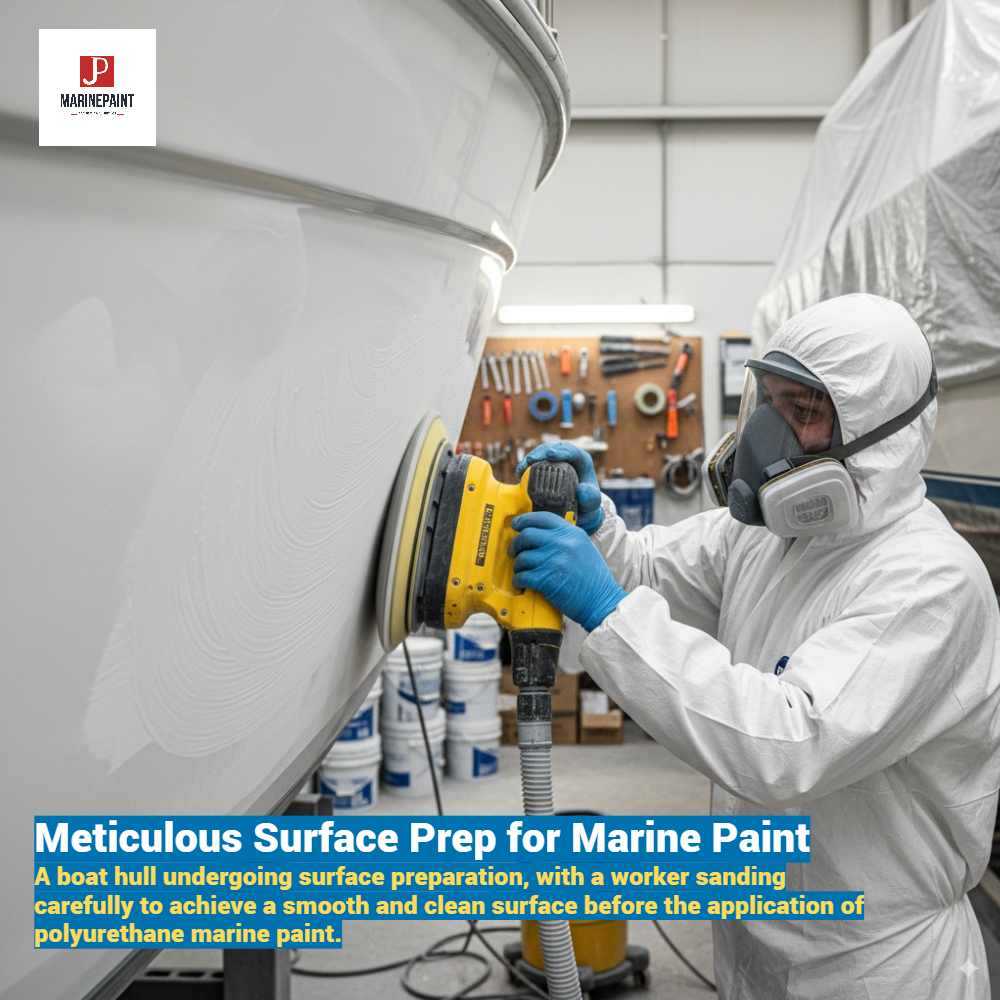
For hands-on preparation, mixing, spraying, rolling, recoating, and curing instructions, use the dedicated polyurethane marine paint application guide.
Common Specification and Application Mistakes
- Using polyurethane directly on an unprepared or contaminated substrate.
- Applying a two-part topcoat over an incompatible one-part coating.
- Treating polyurethane as an underwater antifouling coating.
- Ignoring dew point, steel temperature, humidity, ventilation, or pot life.
- Using one heavy coat instead of achieving the specified film build through controlled coats.
- Missing the recoat window or returning the asset to service before adequate cure.
- Making certification or chemical-resistance assumptions without checking current documents.
Recommended JD Marine Paint Products
- JD908 Acrylic Polyurethane Topcoat: exterior topcoat option where color and gloss retention are required.
- JD918 Acrylic Polyurethane Hull Paint: acrylic polyurethane finish for marine hull and exterior service.
- JDH816 Grey Epoxy Primer: epoxy primer/intermediate option for compatible systems.
Final recommendations should be confirmed using the vessel area, substrate, existing coating condition, target dry film thickness, service environment, application method, and maintenance schedule.
Frequently Asked Questions
Is polyurethane marine paint suitable below the waterline?
Polyurethane is normally specified as an exterior finish above the waterline. Permanently immersed hull areas require a compatible underwater epoxy and antifouling system.
Can polyurethane be applied over epoxy primer?
Yes, this is a common marine coating system, provided the products are compatible and the epoxy is recoated or prepared within the requirements stated in the current technical data sheets.
Is two-part polyurethane better than one-part paint?
Two-part polyurethane generally offers higher durability, chemical resistance, and gloss retention. One-part products can be easier to apply and repair. The correct choice depends on service severity, available equipment, and applicator experience.
Can polyurethane be applied over old paint?
Only when the existing coating is sound, clean, properly abraded, and compatible. If the old coating type is unknown, perform a compatibility test or obtain a project-specific recommendation.
What information is needed for a coating recommendation?
Provide the vessel type, coated area, substrate, old coating condition, operating environment, required color and finish, application method, maintenance window, and any applicable project specification.
Build the Complete Coating System
Polyurethane marine paint performs best when it is treated as the finish layer of a properly engineered system. Match the topcoat to the substrate, primer, service area, environmental conditions, and project documentation. For product selection, technical files, quantity support, or a quotation, contact JD Marine Paint with your project details.