Epoxy and polyurethane marine paint perform different jobs in a coating system. Epoxy is usually selected for adhesion, corrosion protection, barrier performance, and immersion resistance. Polyurethane is usually selected as the exterior finish for UV resistance, color retention, gloss, and abrasion resistance.
For many hull, deck, and superstructure projects, the correct decision is not epoxy or polyurethane. It is an epoxy primer or intermediate coat followed by a compatible polyurethane topcoat.
Epoxy vs Polyurethane Marine Paint at a Glance
| Property | Epoxy marine coating | Polyurethane marine coating |
|---|---|---|
| Typical system role | Primer, intermediate coat, barrier coat, tank lining | Exterior finish coat |
| Adhesion and barrier protection | Excellent on correctly prepared compatible substrates | Depends strongly on the prepared primer or existing coating |
| Corrosion protection | Commonly used as the anti-corrosion foundation | Normally supports, rather than replaces, the primer system |
| UV and weather resistance | Unprotected epoxy can chalk in sunlight | Strong color and gloss retention in exterior service |
| Immersion service | Specialized epoxy systems are widely used | Standard polyurethane topcoats are generally not selected for permanent immersion |
| Finish appearance | Functional, often lower gloss | Smooth, color-stable, and available in high-gloss finishes |
| Abrasion and cleaning resistance | Strong, formulation dependent | Strong exterior wear and cleanability |
| Common application areas | Steel, tanks, underwater barrier systems, primers | Topside hull, decks, superstructure, exposed equipment |
What Is Epoxy Marine Paint Best For?
Two-component epoxy coatings cure into a dense film with strong adhesion and resistance to water and many chemicals. Depending on the formulation, an epoxy may be used as a primer, high-build intermediate coat, tie coat, tank lining, or immersion coating.
Epoxy systems are commonly chosen for:
- Corrosion protection on correctly prepared steel.
- Barrier coats below the waterline.
- Ballast, cargo, potable-water, or industrial tank linings when the specific product is approved for that service.
- High-build intermediate coats that provide film thickness and barrier performance.
- Bonding layers beneath compatible antifouling or polyurethane finish coats.
Epoxy should not automatically be treated as the final exterior finish. In sunlight, many epoxy coatings chalk and lose appearance even when their protective film remains functional.
What Is Polyurethane Marine Paint Best For?
Polyurethane marine paint is normally the visible exterior layer. It provides the color, gloss, UV resistance, and weather durability required on topsides, decks, superstructures, and exposed equipment.
Polyurethane is commonly chosen for:
- Hull topsides above the waterline.
- Decks and superstructures exposed to sunlight and salt spray.
- Areas requiring long-term color and gloss retention.
- Surfaces exposed to routine cleaning, abrasion, oils, and atmospheric contamination.
- Professional finish systems applied over a compatible epoxy primer or intermediate coat.
For a full polyurethane selection guide, including one-part and two-part systems, see Polyurethane Marine Paint: Types, Benefits & Selection Guide.
When Should You Use Epoxy and Polyurethane Together?
A common exterior marine system follows this sequence:
- Surface preparation: remove contamination, corrosion, and unsound coating to the specified standard.
- Epoxy primer: provide adhesion and corrosion protection.
- Epoxy intermediate coat: build barrier thickness where required.
- Polyurethane topcoat: provide color, gloss, UV stability, and weather resistance.
The exact products, film thickness, number of coats, and recoat windows depend on the substrate and service area. Compatibility must be confirmed using the latest product data sheets.
Which Coating Should You Choose by Vessel Area?
| Vessel area | Primary exposure | Typical coating direction |
|---|---|---|
| Topside hull | UV, weather, salt spray, appearance | Epoxy primer/intermediate plus polyurethane topcoat |
| Underwater hull | Permanent immersion and fouling | Underwater epoxy barrier plus compatible tie coat and antifouling paint |
| Deck | UV, abrasion, foot traffic, spills | Epoxy protection plus polyurethane or specified deck finish |
| Superstructure | UV, weather, salt spray | Epoxy anti-corrosion system plus polyurethane finish |
| Ballast or cargo tank | Immersion and cargo exposure | Service-specific epoxy lining system |
| Potable water tank | Water contact and document requirements | Product specifically approved for potable-water service |
| Machinery and equipment | Weather, oils, cleaning, wear | Epoxy primer with a compatible durable finish |
Durability and Maintenance Comparison
Coating life cannot be predicted from resin type alone. Surface preparation, salt contamination, edge treatment, achieved dry-film thickness, application conditions, curing, mechanical damage, and maintenance all influence service life.
Epoxy failure is often linked to poor surface preparation, under-film corrosion, missed recoat windows, or incorrect service selection. Polyurethane appearance problems are often linked to dry spray, moisture, incorrect thinner, excessive film thickness, poor mixing, or application outside environmental limits.
Application Differences
Epoxy Application
Epoxy coatings often require abrasive preparation, accurate two-component mixing, controlled induction and pot life, and close attention to maximum recoat intervals. Some high-build products are designed to achieve substantial film thickness, but excessive application can still cause solvent entrapment or curing problems.
Polyurethane Application
Polyurethane finish quality is sensitive to atomization, viscosity, thinner selection, temperature, humidity, dew point, ventilation, and applicator technique. For the complete process, use the polyurethane marine paint application guide.
Cost: Which Coating Provides Better Value?
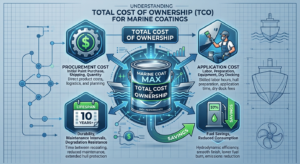
Comparing price per liter does not show total system value. A proper comparison includes:
- Surface preparation and labor.
- Coverage at the specified dry-film thickness.
- Number of coats and application time.
- Expected maintenance and downtime.
- Exposure to UV, immersion, abrasion, and chemicals.
- Compatibility with the existing coating.
- Inspection and documentation requirements.
Using a lower-cost coating in the wrong layer can increase total cost through early failure, rework, or shorter maintenance intervals.
Recommended JD Marine Paint System Components
- JDH816 Grey Epoxy Primer for compatible epoxy primer/intermediate applications.
- JDH819 Epoxy Zinc Phosphate Primer for anti-corrosion primer applications where specified.
- JD908 Acrylic Polyurethane Topcoat for exterior color and gloss retention.
- JD918 Acrylic Polyurethane Hull Paint for compatible hull and exterior finish systems.
Decision Checklist
- Use epoxy when the primary requirement is adhesion, corrosion protection, barrier performance, or a service-specific lining.
- Use polyurethane when the primary requirement is exterior UV resistance, color, gloss, and weather durability.
- Use both when the asset needs epoxy protection beneath a durable exterior finish.
- Do not use a standard polyurethane topcoat as antifouling paint or assume a general epoxy is approved for every tank service.
- Confirm the complete system against current TDS, SDS, project specifications, and local requirements.
Frequently Asked Questions
Can polyurethane paint be applied over epoxy?
Yes, this is a common system when both products are compatible and the epoxy is within its recoat window or has been prepared as required.
Can epoxy be used as the final exterior coat?
It can remain functional, but many epoxies chalk and lose appearance under UV exposure. A compatible polyurethane topcoat is normally used where exterior color and gloss retention matter.
Which is better below the waterline?
A service-specific underwater epoxy is normally used as the protective barrier, followed by the required tie coat and antifouling paint. Standard polyurethane topside paint is not a substitute for this system.
Which is more durable?
Durability depends on the exposure and system role. Epoxy is stronger for barrier and immersion duties; polyurethane is stronger for exterior UV and finish retention. The best result often comes from using each in the correct layer.
For a project-specific system recommendation, send the vessel area, substrate, existing coating, service environment, target film thickness, and maintenance schedule through the JD Marine Paint inquiry form.