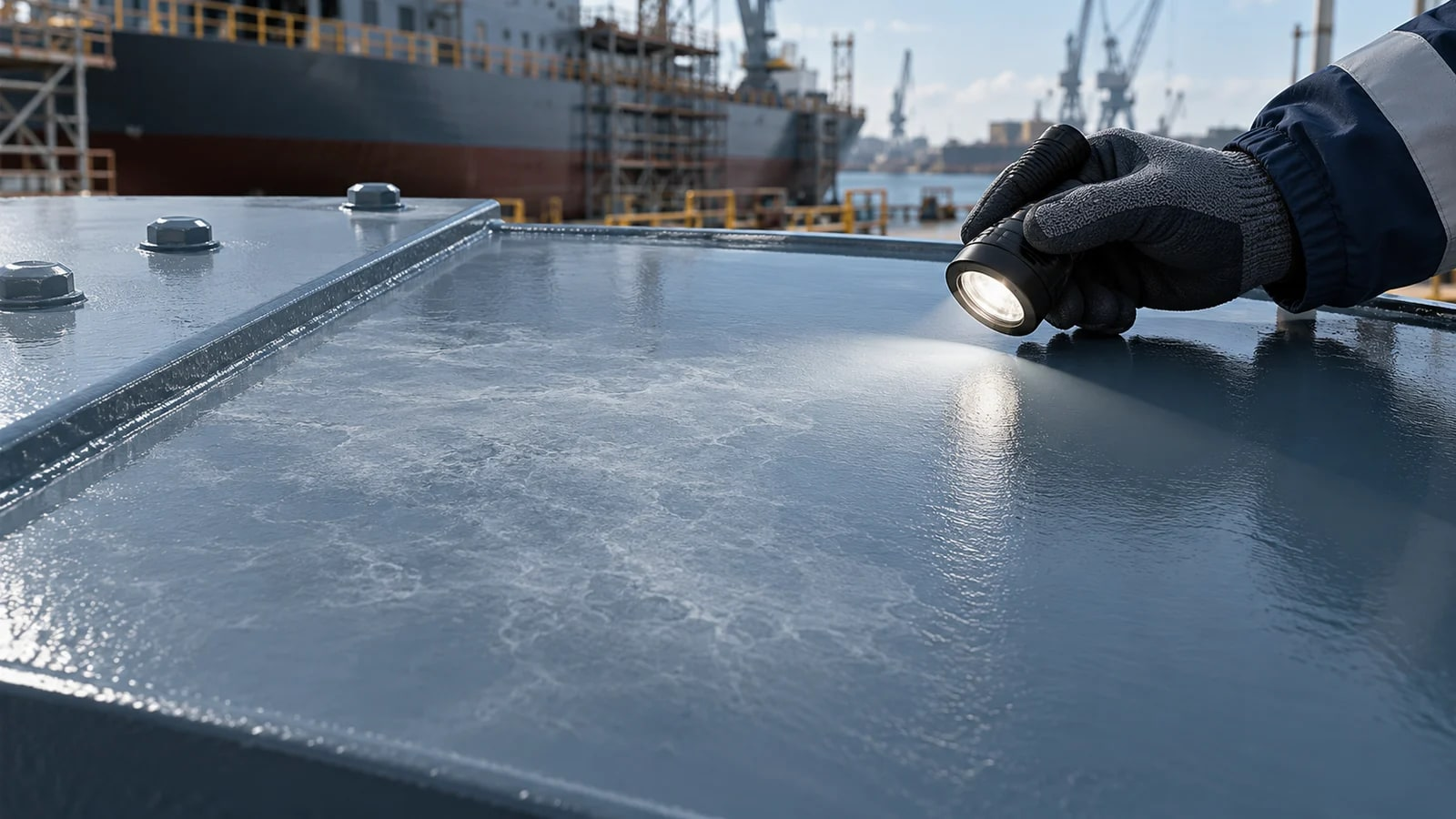
Featured image: AI-generated illustration of epoxy surface inspection. Appearance alone does not confirm amine blush.
Amine blush is a surface deposit that can form while some amine-cured epoxy coatings cure. It may look waxy, greasy or cloudy and can interfere with adhesion of the next coat. Before recoating, distinguish surface contamination from an undercured film, follow the coating manufacturer’s approved cleaning procedure, and confirm that the surface and recoat conditions meet the specification.
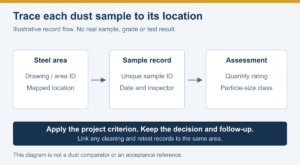
For a shipyard, the practical question is whether the prepared area is ready for the next layer. A useful inspection record connects the observation to a location, coating product, cure history and documented decision. This guide focuses on that decision rather than a complete hull-painting procedure.
What causes amine blush on epoxy?
The amine component of an epoxy can react with atmospheric moisture and carbon dioxide during cure. Susceptibility depends on formulation and conditions. Cool, damp conditions can encourage the problem, and a surface deposit may be uneven or difficult to see. A white haze alone does not establish the cause. Sherwin-Williams explains the reaction and possible appearances.
On a marine maintenance job, document which areas were exposed to rain, condensation, wash water or overnight weather changes. Keep separate observations for sheltered areas and exposed sections. These details help the technical reviewer investigate the affected coating without assuming every similar-looking mark has the same origin.
Is it blush, salt, oil or an undercured coating?
Use the following table to organize an investigation. It is an inspection aid, not a diagnosis based on appearance.
| Observation | Question to investigate | Record before deciding |
|---|---|---|
| Waxy or greasy surface film | Could this be amine blush or another contaminant? | Location, photographs, product and cure conditions |
| White deposits after marine exposure | Could salts or another deposit be present? | Exposure history and any specified contamination-test results |
| Soft or persistently sticky coating | Is the film adequately cured, and were the correct components mixed? | Mix records, component batches, temperatures and elapsed time |
| Localized oily marks | Could handling, equipment or another operation have contaminated the area? | Adjacent work, equipment and cleaning history |
| Apparently clean coating | Have the specified preparation and inspection requirements been met? | Inspection method, result and reviewer |
For unresolved or service-critical cases, ask whether field screening or laboratory analysis is appropriate. KTA describes limitations of field methods and notes that surface-pH indications can be affected by substances other than amine blush. Its guidance also identifies situations where questionable epoxy cure may require coating removal rather than surface cleaning alone. KTA’s technical discussion supports treating contamination and cure as separate questions.
A screening result should also be reported according to the actual instrument method. For example, the Elcometer 139 chip-screen user guide describes a qualitative result rather than a measurement of deposit quantity. Do not translate a presence/absence indication into an invented contamination percentage or universal acceptance limit.
How to remove amine blush before recoating
1. Establish the product-specific procedure
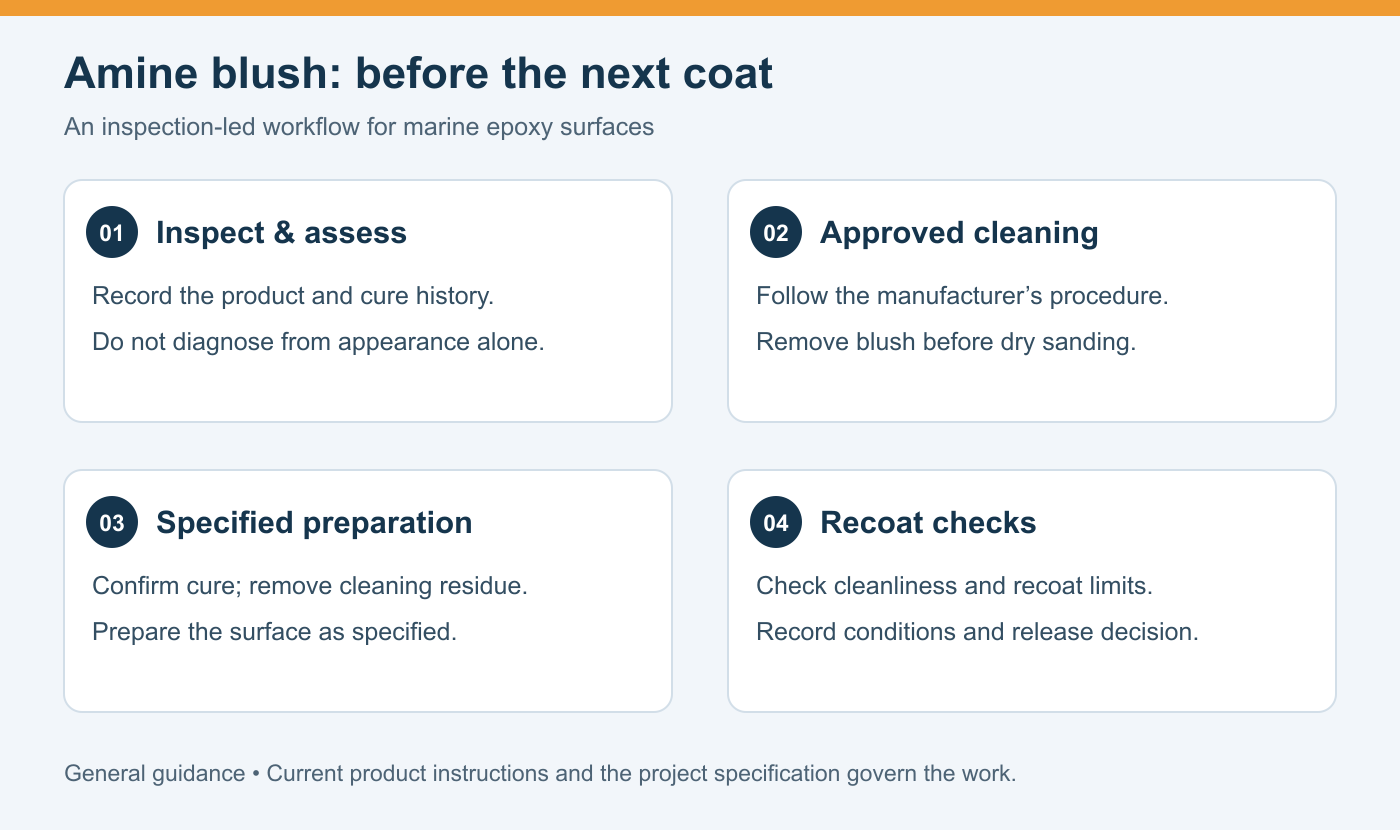
Identify the existing epoxy and proposed next coat. Obtain the current technical data sheet, safety data sheet and applicable application instructions. Confirm the approved cleaner, preparation method, drying requirements and recoat rules before work starts.
For JD Marine Paint systems, begin with the relevant marine epoxy coating information and request the current documents for the exact product. A general guide cannot establish compatibility or cleaning instructions for every formulation.
2. Clean the deposit before dry sanding
Water-based cleaning is commonly used for amine blush. WEST SYSTEM recommends clean water and a suitable abrasive pad for its cured epoxy surfaces, followed by removal of the contaminated liquid. It explains that many organic solvents are ineffective against this water-soluble film. Read WEST SYSTEM’s surface-preparation guidance.
Use the method approved for the coating on the job. Avoid choosing a thinner simply because it is already available in the paint store. Where an approved detergent or cleaner is required, follow its dilution and rinse instructions so the cleaning operation does not leave another residue.
3. Remove the wash residue and inspect again
Keep cleaning materials separate from tools used on oily equipment or unprepared steel. Record the cleaned area and any remaining suspicious patches. Wessex’s epoxy preparation guidance emphasizes removing the dissolved deposit before it dries back onto the surface and cleaning contamination before sanding. Its preparation instructions illustrate the importance of sequence; their product-specific abrasive recommendation should not automatically be transferred to a marine paint system.
If the film remains soft, the deposit persists, or the result is unclear, pause the recoat decision and obtain technical direction.
4. Complete the specified preparation
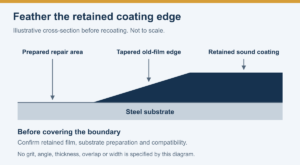
After contamination removal and drying, carry out any required abrasion and dust removal. Use the preparation method specified for the existing coating and intended next coat. Do not adopt one sandpaper grade for all epoxy primers, intermediate coats and finishes.
For the broader application workflow, see our marine primer application and troubleshooting guide.
When can the next coat be applied?
The project record should answer three separate questions: Has contamination been removed? Is the existing film suitable for overcoating? Are the timing and environmental requirements satisfied? A calendar interval alone does not answer all three.
Before releasing an area, complete this checklist:
- Identify the existing product and intended next coat.
- Attach the applicable document versions and coating specification.
- Record the affected area and cleaning method.
- Record the inspection or screening result, where required.
- Confirm the film condition against the manufacturer’s instructions.
- Confirm completion of any required abrasion and dust removal.
- Record substrate temperature, humidity and dew-point information as specified.
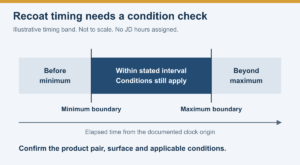
- Check the applicable recoat interval and any additional preparation after it expires.
- Record the person responsible for the release decision.
Use the checklist to make an incomplete prerequisite visible. For example, a cleaning record should not be treated as approval when the next-coat compatibility question remains open.
How can a shipyard reduce the risk?
Plan the coating operation around the actual application and curing conditions. Sika’s explanation of amine blush and epoxy cure reinforces the role of moisture, carbon dioxide and environmental conditions.
Build the following items into the job plan: the product’s permitted application conditions, monitoring during cure, component identification, specified mixing procedure, any required induction period, and responsibility for checking the surface before the next shift recoats it. Assign someone to review the overnight conditions rather than relying only on a reading taken when painting began.
Frequently asked questions
Can I paint over amine blush if the epoxy is still within its recoat window?
Do not assume the time window authorizes coating over contamination. Complete the approved surface preparation and resolve any film-condition concern before proceeding. If an exception is proposed, obtain written direction for the actual system.
Will an epoxy thinner remove amine blush?
Do not rely on a solvent wipe as the default method. Use the coating manufacturer’s approved cleaning procedure; blush removal and removal of oil or grease may call for different methods.
Does amine blush mean the entire coating must be removed?
Not automatically. Determine the extent of contamination and whether the coating has cured satisfactorily. A surface-cleaning remedy and removal of an inadequately cured coating are different repair decisions.
Need help reviewing an epoxy recoat condition?
Send JD Marine Paint the coating product code, batch details, application date, cure conditions, affected-area photographs and proposed next coat. Include the project specification and any inspection results so the discussion can address the actual system.
Review our marine epoxy primer range or submit your project details for technical review.