The best antifouling paint is the product that matches your hull material, vessel speed, operating pattern, fouling pressure, existing coating, maintenance interval, and local regulations. A paint that performs well on a fast commercial vessel may be unsuitable for a slow sailboat, a trailer boat, or an aluminum hull.
This evergreen guide helps boat owners, shipyards, fleet managers, and distributors compare antifouling options without relying on a model year or a one-product-fits-all recommendation.
Antifouling Paint Selection at a Glance
| Vessel profile | Typical direction | Important checks |
|---|---|---|
| Frequently used powerboat | Hard or high-performance self-polishing antifouling | Speed range, abrasion, launch schedule, local fouling |
| Sailboat or moderate-use cruising boat | Ablative or self-polishing antifouling | Activity level, haul-out cycle, compatibility |
| Commercial vessel with planned dry-docking | System selected for service speed and docking interval | Fuel performance, film depletion, class or owner specification |
| Trailered or regularly scrubbed boat | Hard antifouling where compatible | Abrasion and repeated launching |
| Aluminum hull or outdrive | Copper-free product specifically approved for aluminum | Galvanic compatibility and complete barrier system |
| Low-use vessel in heavy fouling water | Product designed to remain effective at low activity | Fouling species, water temperature, salinity, idle periods |
How Antifouling Paint Works
Antifouling coatings control the attachment and growth of slime, algae, weeds, barnacles, and other organisms on immersed surfaces. Depending on the technology, the coating may release an approved active ingredient at a controlled rate, renew its surface as the vessel moves, maintain a hard leaching matrix, or create a low-surface-energy finish that reduces attachment.
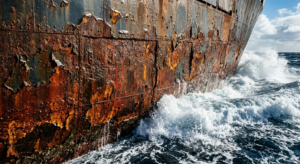
Biofouling increases hydrodynamic drag, fuel consumption, emissions, and cleaning frequency. Severe fouling can reduce speed and interfere with cooling-water inlets, sensors, propellers, and running gear. The coating should therefore be selected as part of the vessel’s operating and maintenance plan.
Main Types of Antifouling Paint
Hard Antifouling
Hard antifouling forms a durable film that resists abrasion and can suit faster boats, frequently used vessels, or surfaces that receive controlled cleaning. The binder remains while active ingredients are released, so old film can build up over repeated maintenance cycles and may eventually require removal.
Ablative and Self-Polishing Antifouling
Ablative coatings gradually wear or renew at the surface. Self-polishing copolymer systems are designed to control polishing and active release over time. They can reduce long-term film build and suit many cruising and commercial schedules, but performance depends on vessel movement, formulation, film thickness, and service conditions.
For a detailed operational comparison, read Hard vs Ablative Antifouling Paint.
Copper-Free Antifouling
Copper-free antifouling uses alternative active technologies and is especially important where copper creates material-compatibility or environmental concerns. Product approval, local regulation, hull material, and target fouling organisms must still be checked.
See the copper-free antifouling paint guide and the copper-free vs copper-based ROI comparison for the separate technology and commercial questions.
Foul-Release Coatings
Foul-release systems create a smooth, low-surface-energy surface rather than relying on conventional biocide release. They can reduce attachment and make growth easier to remove under suitable vessel speeds and cleaning practices. Surface preparation, specialized application, repair procedures, and operating profile are decisive.
Best Antifouling Paint for Aluminum Boats
For an aluminum boat, use only antifouling explicitly approved for aluminum and compatible with the specified primer and barrier coats. Traditional high-copper bottom paint in direct electrical contact with aluminum can contribute to galvanic corrosion. Do not rely on a thin or damaged barrier layer to isolate an incompatible antifouling.
- Remove aluminum oxide and contamination using the specified preparation method.
- Apply the approved aluminum primer promptly after preparation.
- Build the specified epoxy barrier thickness, including stripe coats and repairs.
- Apply a compatible tie coat when required.
- Finish with aluminum-safe, normally copper-free antifouling.
- Keep dissimilar metals, fasteners, anodes, and electrical bonding in the corrosion assessment.
For topside, primer, underwater, and maintenance details, use the marine paint for aluminum hull guide.
Seven Factors That Determine the Right Bottom Paint
1. Hull Material
Steel, fiberglass, wood, and aluminum require different primers and compatibility checks. Aluminum is the most sensitive to copper-containing products. Never assume a bottom paint is universal.
2. Vessel Speed and Activity
High-speed or regularly used vessels may benefit from abrasion-resistant or controlled-polishing technologies. Long idle periods can change how the coating surface behaves and which fouling organisms dominate.
3. Water and Fouling Pressure
Warm, nutrient-rich, sheltered water often produces heavier fouling than cold or fast-moving water. Ask local yards and operators about slime, weed, barnacle, and seasonal patterns.
4. Existing Antifouling
Identify the old coating where possible. Sound compatible paint may be cleaned and prepared for recoating, while unknown, excessively built-up, soft, peeling, or incompatible layers may require sealing or removal.
5. Maintenance and Cleaning
Frequent underwater cleaning can rapidly remove soft coatings and release residues. Hard coatings tolerate controlled cleaning better, but cleaning method and local rules must be considered.
6. Haul-Out and Launch Schedule
Check minimum curing time, maximum time before launch, and whether the coating can remain out of water after application or after a short service period.
7. Local Regulations
Antifouling active ingredients and cleaning practices are regulated differently by country, port, marina, and vessel class. Confirm that the product and its use are permitted at the destination.
Compatibility and Surface Preparation
Antifouling is the final underwater layer. It does not replace corrosion protection or an osmosis barrier. Steel commonly needs an immersion-rated epoxy system; fiberglass may need an epoxy barrier where osmosis protection is required; aluminum needs a compatible non-ferrous primer and barrier system.
- Pressure-wash immediately after haul-out before fouling dries.
- Remove loose, peeling, contaminated, or incompatible coating.
- Repair corrosion, laminate damage, pinholes, and exposed substrate.
- Sand or prepare the sound coating to the specified profile.
- Remove dust, salts, oil, and moisture.
- Apply primer or tie coat where required before antifouling.
How to Apply Antifouling Paint
- Read the TDS and plan preparation, number of coats, DFT, thinner, and launch window.
- Mask the waterline and protect anodes, transducers, shafts, and areas not to be coated.
- Mix thoroughly and keep heavy pigments uniformly suspended.
- Apply by the permitted roller, brush, or spray method.
- Measure consumption and film build; add an extra coat at leading edges, waterline, rudder, and high-wear areas when specified.
- Observe minimum and maximum overcoating intervals.
- Allow full curing and launch within the permitted window.
How Much Antifouling Paint Do You Need?
Calculate underwater hull area, then use theoretical coverage at the specified dry-film thickness. Add realistic allowances for hull shape, surface roughness, rollers or spray losses, stripe coats, wastage, and extra high-wear coats. Buying enough material for the specified film is more important than maximizing spread rate.
JD Marine Antifouling Options to Evaluate
- JD753 Tin-Free Self-Polishing Antifouling Paint for compatible self-polishing systems.
- JD713 Chlorinated Rubber Antifouling Paint for suitable specified systems.
- JD744 Chlorinated Rubber Antifouling Paint for compatible underwater applications.
- JD44-83 Bituminous Antifouling Paint where its technology and service conditions are specified.
Antifouling Buying Checklist
- Hull material and complete existing system.
- Vessel type, operating speed, activity, and idle periods.
- Operating water, salinity, temperature, and fouling severity.
- Planned maintenance and dry-docking interval.
- Surface preparation and application equipment available.
- Required DFT, number of coats, curing, and launch window.
- Local regulatory and documentation requirements.
Frequently Asked Questions
Is hard or ablative antifouling better?
Neither is universally better. Hard paint favors abrasion resistance and some high-activity profiles; ablative or self-polishing paint favors controlled surface renewal. Match the technology to the vessel and maintenance plan.
Can I apply new antifouling over old bottom paint?
Only when the old coating is sound, clean, prepared, and compatible. Unknown or incompatible coatings may need removal or an approved sealer or tie coat.
Can antifouling be used on aluminum?
Yes, but only products explicitly approved for aluminum and used over the specified compatible primer and barrier system. Avoid incompatible copper-containing coatings.
How often should antifouling be renewed?
The interval depends on coating type, film thickness, vessel activity, fouling pressure, cleaning, damage, and dry-docking schedule. Inspect performance rather than relying on a universal annual rule.
For a project-specific recommendation, send the hull material, vessel type, operating speed, location, existing coating, maintenance interval, underwater area, quantity, destination, and required certificates through the JD Marine Paint contact form.