Smarter Paint, Longer at Sea: Cut Costs & Extend Dry-Docking
Every day your vessel sits in dry dock, you’re losing revenue. It’s a simple, painful truth. For shipowners and fleet operators, minimizing downtime isn’t just a goal—it’s the key to profitability. While dry-docking is an expensive and unavoidable part of the business, there’s a critical factor many overlook: the paint you choose.
The impact of paint choice on dry-docking intervals is massive. By ditching budget coatings for advanced, strategically chosen marine paints, you can unlock game-changing operational efficiency. This is your guide to how the right coating strategy keeps your fleet at sea longer, maximizes profits, and streamlines long-term maintenance. 🚢
Unlock More Sea Time with the Extended Dry-Docking Scheme (EDS)
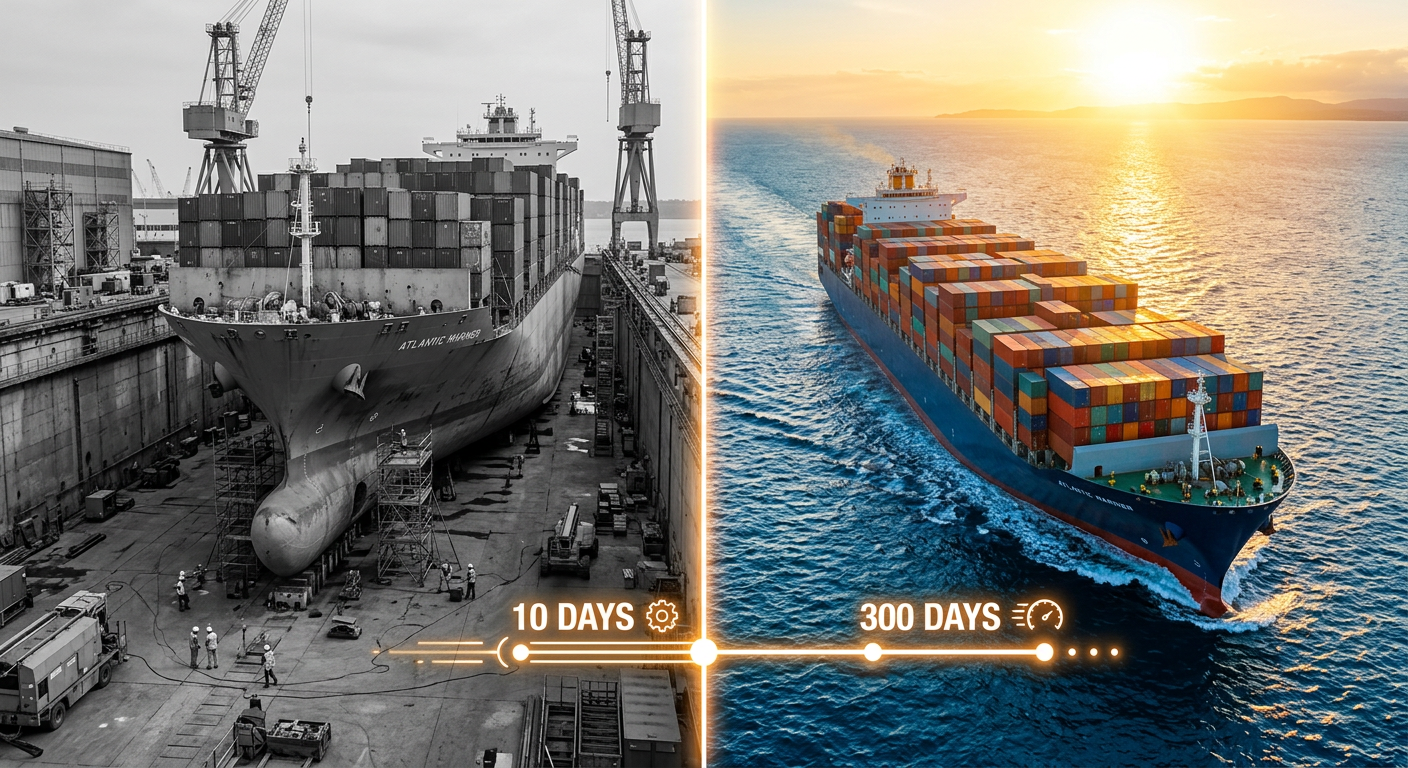
Traditionally, vessels need a full bottom inspection in a dry dock twice every five years. But what if you could stretch that? Major classification societies now offer an extended dry-docking scheme (EDS). This program allows eligible vessels to push their dry-docking interval to a remarkable 7.5 years, provided they meet strict maintenance standards.
The key to unlocking this extra sea time? The condition of your underwater hull. To qualify for an EDS, your vessel must pass a rigorous in-water survey (IWS) at the halfway mark. During the IWS, divers or ROVs inspect the hull for any signs of trouble—corrosion, blistering, or biofouling. If your coating has failed, your EDS status is revoked, and it’s straight to the dry dock.
This is where sharp vessel maintenance planning pays off. You simply can’t qualify for an EDS with a standard paint job. The impact of paint choice on dry-docking intervals becomes crystal clear here: cheap paints break down, fail the IWS, and force costly, early downtime. Premium coatings hold strong, securing your extended operational window and keeping you in the water, earning revenue.
The Real Money: Slashing OPEX with High ROI Marine Coatings
It’s easy to get fixated on the upfront cost of paint. But focusing on the price per liter is a classic false economy. The metric that truly matters is your marine coating ROI (Return on Investment) over the vessel’s entire operational cycle.
Dry-docking is a financial black hole. Between tugs, pilotage, dock fees, blasting, and repainting, costs quickly run into the hundreds of thousands, if not millions. Worse yet is the opportunity cost of off-hire days, where lost revenue can top $100,000 per day. Extending the time between these events is one of the most effective strategies for massive OPEX reduction.
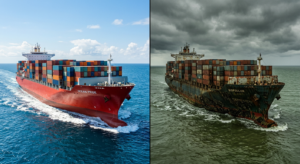
But the savings don’t stop there. A smooth, foul-free hull means less drag. Less drag means less fuel burned every single day. Since fuel is one of the top vessel operational costs, a high-performance coating essentially pays for itself multiple times over. When you choose a paint that actively fights marine growth and rust, you’re buying fuel efficiency and more revenue-generating days.
Win the War on Slime: Advanced Antifouling Paint Systems
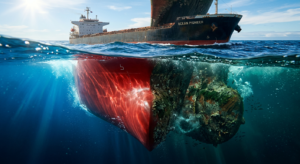
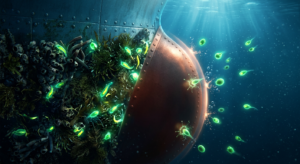
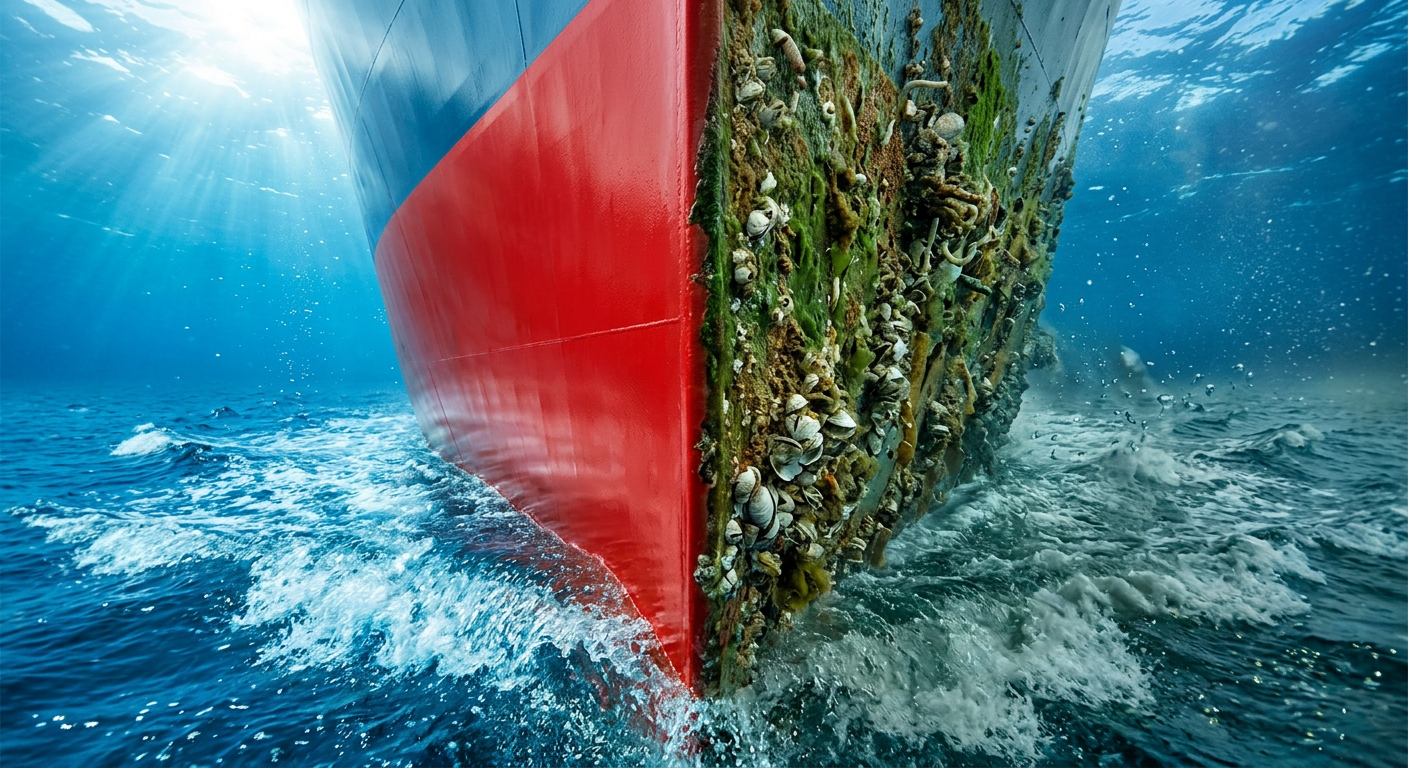
Biofouling—the buildup of slime, algae, and barnacles on your hull—is a fleet manager’s worst enemy. Even a thin layer of slime can increase fuel consumption by 15%. Heavy fouling can spike it by an incredible 80%. Effective biofouling management is non-negotiable for maintaining speed, performance, and complying with environmental regulations.
This is where advanced antifouling paint systems come in. Modern coatings have moved beyond old toxic formulas to highly engineered solutions. Two leading technologies dramatically influence the impact of paint choice on dry-docking intervals:
- Self-Polishing Copolymers (SPC): These smart paints wear away at a controlled rate, constantly exposing a fresh, biocide-active layer. This provides consistent, long-term protection. The JD753 Tin-free self-polishing antifouling paint delivers a steady polishing rate to keep the hull smooth for years, making it perfect for vessels on an extended dry-docking schedule.
- Foul-Release Coatings: Instead of chemicals, foul-release coatings use physics. They create an ultra-slick, silicone-based surface that marine life can’t grip. Any organisms that do attach while stationary are simply washed off once the vessel gets up to speed.
For robust protection in demanding coastal waters, our JD713 Chlorinated Rubber Antifouling Paint offers outstanding adhesion and defense against marine growth, providing one of the most practical and effective hull performance solutions available.
The Unsung Hero: Anti-Corrosive Primers and Ship Service Life Extension
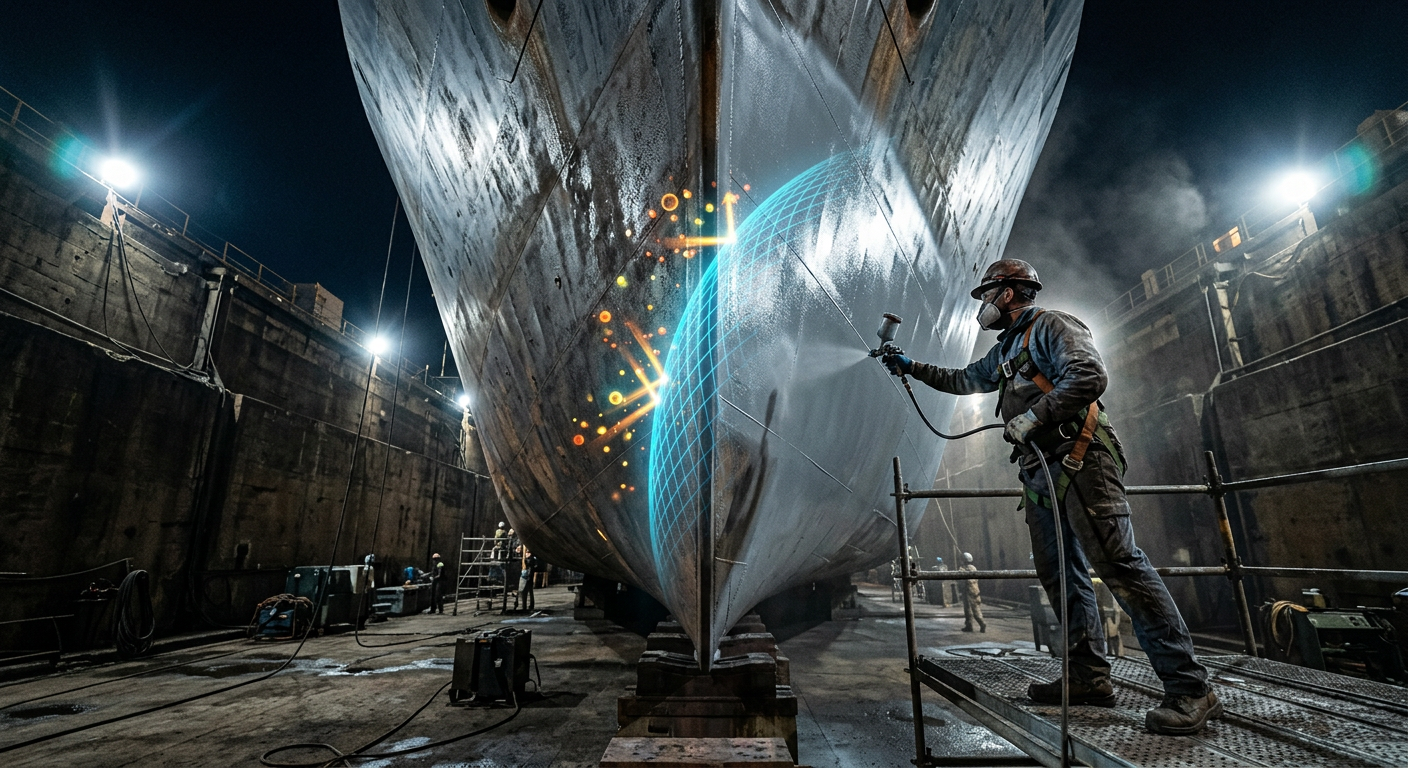
While antifouling topcoats get the glory, the real foundation of your vessel’s health is the primer. Seawater is relentless in its attack on steel. Rust and corrosion don’t just look bad; they compromise structural integrity, leading to massive steel replacement bills in the dry dock. ⚓
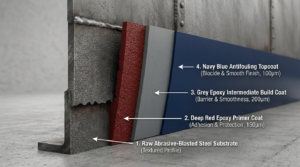
High-performance anti-corrosive primers create an unbreakable barrier between steel and saltwater. A flawless primer application is the baseline requirement for successful ship service life extension.
A top-tier strategy involves zinc-rich epoxy primers. Zinc acts as a sacrificial layer, corroding to protect the steel underneath if the coating gets scratched. The JDH06-4 Epoxy Zinc-Rich Anti-Rust Primer is engineered for exactly this, delivering heavy-duty protection to keep the hull secure for years.
To ensure a permanent bond between primer and topcoat, specialized tie-coats like the JDH825 Solvent-Free Epoxy Tie Coat are essential. For routine maintenance, easy-to-apply alkyd systems like JDC53-31 Red Lead Alkyd Anti-Rust Paint offer reliable protection for above-water areas, keeping the entire vessel in peak condition.
Make the Right Call: Your Vessel’s Performance Depends On It
To fully grasp the impact of paint choice on dry-docking intervals, you must shift from short-term budgets to long-term lifecycle costs. Before you choose your next coating, ask:
- What is my vessel’s operating profile? A ship that’s always moving needs a different solution than one that sits idle in warm, tropical ports.
- Is my surface preparation flawless? The best paint in the world will fail on a poorly prepared surface. Invest in proper blasting and priming.
- Am I compliant? Environmental regulations are always tightening. Choose modern, compliant coatings to avoid fines and delays.
Aligning your paint selection with your operational goals isn’t just maintenance—it’s buying time. Time your ship spends earning revenue, not costing you money in a shipyard.
Your Course to Operational Excellence
In the maritime industry, small gains create huge advantages. Choosing the right marine coating is a powerful commercial strategy that directly impacts your bottom line. 💡
Key Takeaways
- The impact of paint choice on dry-docking intervals is a primary driver of profitability, enabling access to money-saving Extended Dry-Docking Schemes.
- Premium antifouling paint systems and anti-corrosive primers slash fuel consumption and costly off-hire time.
- Smart vessel maintenance planning prioritizes long-term marine coating ROI and performance over initial paint costs.
Next Steps
Ready to optimize? Start by reviewing your vessel’s performance data against your current coating specs. Analyze fuel trends and old dry-docking reports. Then, consult with coating specialists to design a system tailored to your fleet’s needs.
By making strategic choices today, you protect your assets and keep your fleet where it belongs: on the open water, operating at peak profitability.