Beyond the Price Tag: The True Cost of Marine Coatings
Fleet maintenance is a high-stakes balancing act. Shipowners and procurement managers face a constant battle between tight budgets and the relentless demands of the ocean. It’s easy to get sticker shock from a repainting quote. While the urge to cut immediate expenses is strong, focusing only on the upfront marine paint price per liter/gallon can trigger catastrophic long-term costs.
To make smart, strategic decisions, you have to look beyond the initial invoice. A cheap bucket of paint might save you a few dollars today, but what’s the real price in fuel penalties, premature corrosion, and unplanned maintenance tomorrow? 🚢
This guide breaks down the real economics of marine coatings. We’ll shift the focus from the price tag to the total financial impact of your choices, helping you make decisions that protect both your vessels and your bottom line.
What Really Determines the Marine Paint Price Per Liter/Gallon?
Before weighing long-term value, let’s look at what drives the upfront cost. Not all paints are created equal. The liquid in the tin is a complex chemical formula engineered for a specific, demanding job.
When you buy marine coatings, you’re paying for a sophisticated blend of binders, pigments, solvents, and performance-enhancing additives. The coating’s intended use dictates its price. For example, standard topside enamels are priced differently from hull coatings; the overall boat bottom paint cost is higher because it requires highly regulated biocides to stop marine growth.
Key factors influencing the price include:
- Resin Technology: Traditional alkyd paints are often cheaper upfront than advanced epoxy or polyurethane systems, but they may not offer the same durability in harsh environments.
- Volume and Scale: Bigger orders mean better deals. Securing favorable bulk marine paint prices through a strong supplier relationship can dramatically lower per-unit costs.
- Raw Material Quality: High-grade primers use powerful anti-corrosive pigments to create an impenetrable barrier against salt and moisture.
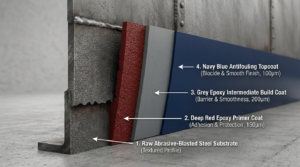
A durable coating system is built from the steel up. Investing in a premium foundational layer like the JDH815 Iron Oxide Red Epoxy Primer guarantees superior adhesion and rust resistance. While the initial cost is slightly higher, its integrity prevents topcoats from failing early, proving that quality matters from the very first layer.
Beyond the Bucket: Calculating Total Cost of Ownership
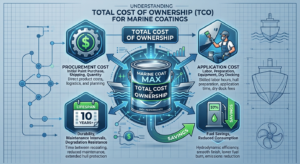
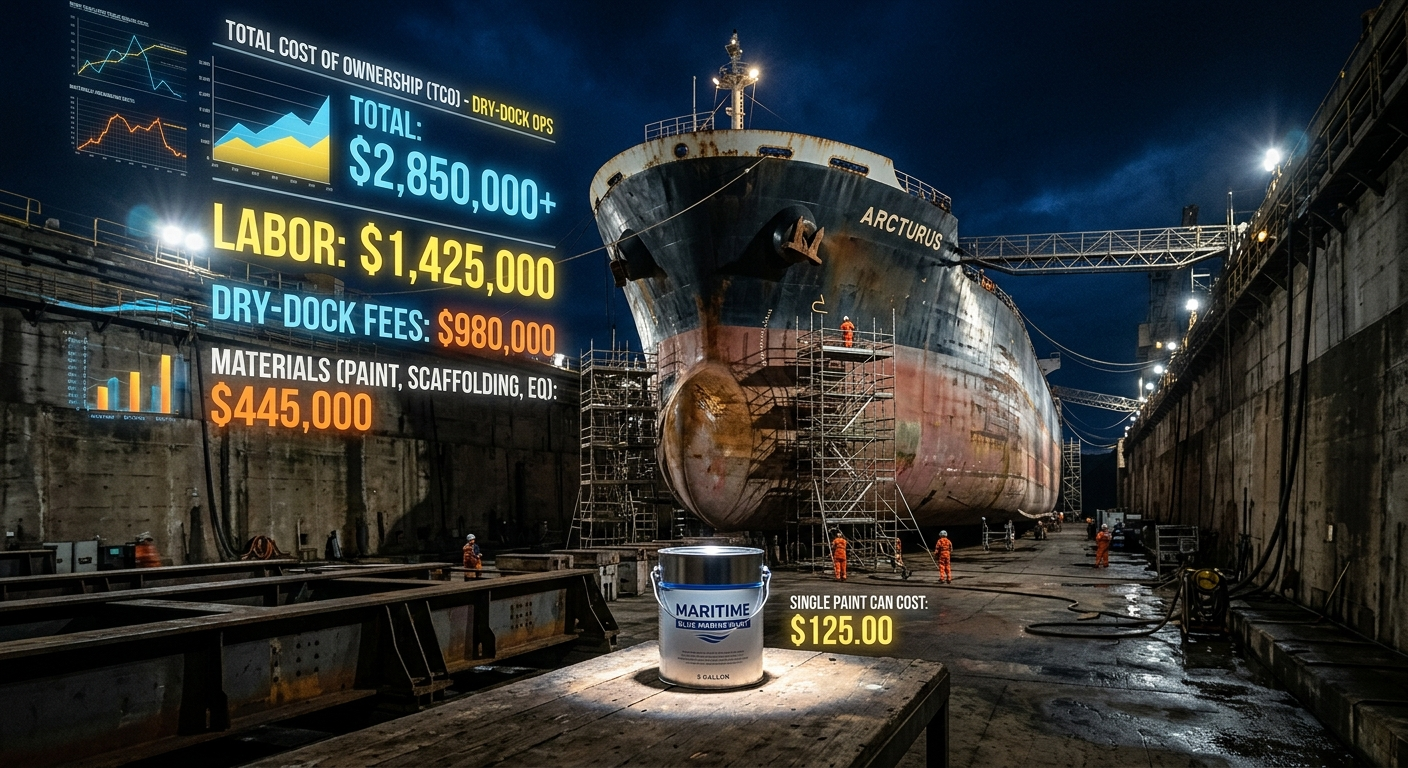
Focusing solely on the marine paint price per liter/gallon is a massive financial blind spot. During a commercial dry-docking, the paint itself often accounts for less than 20% of the total project budget. This brings us to the most critical metric: total cost of ownership.
A thorough marine paint project estimation must include all operational and labor expenses. Applying a “cheap” paint requires the same amount of labor, scaffolding, and surface preparation as a premium, high-performance coating.
Consider the huge expenses that dwarf the cost of the paint itself:
- Surface Preparation: Grit blasting and hydro-blasting are labor-intensive and expensive. If a cheap coating fails, you’re paying for this entire process all over again, years ahead of schedule.
- Dry-Dock Fees: Every day a vessel is in dry-dock, it racks up enormous rental fees and loses revenue.
- Labor and Application: Professional crews are a major overhead. High-quality paints often offer better flow and faster curing times, cutting down on billable hours.
Using a marine coating cost calculator is essential for an accurate financial picture. For areas needing heavy-duty protection, refined traditional formulas like JDC53-31 Red Lead Alkyd Anti-Rust Paint provide reliable corrosion defense, helping control maintenance budgets while extending the life of your steel.
How Vessel Coating Lifespan Drives Long-Term Value 💡
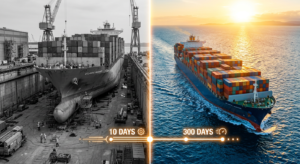
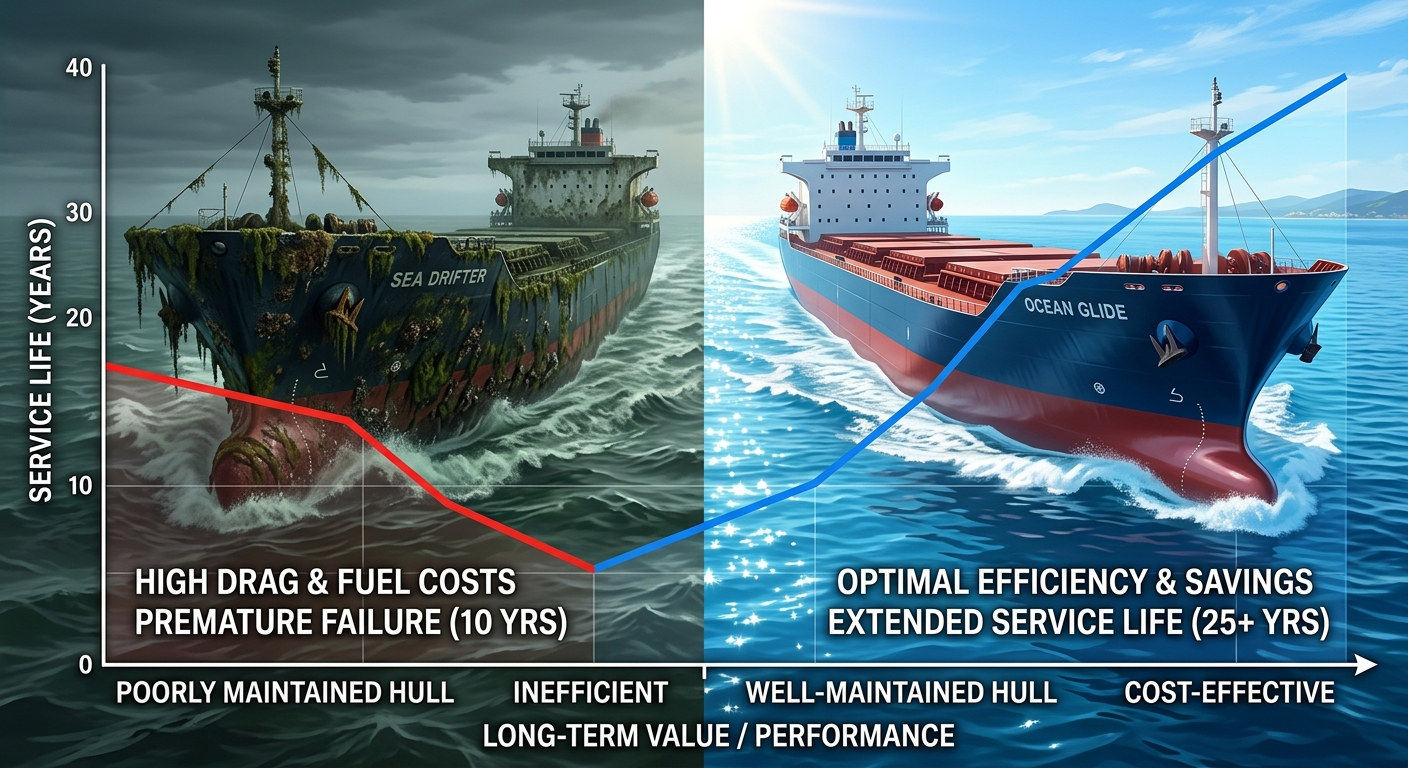
The real ROI of a marine coating becomes clear once a ship is back in service. The ultimate goal is to safely extend the time between maintenance cycles. A longer vessel coating lifespan directly translates to massive dry-docking cost reduction. If a premium system lets a vessel operate for five years between dry-dockings instead of three, the savings can reach hundreds of thousands of dollars per ship.
This value is most obvious on the underwater hull. The antifouling paint cost is often a high-ticket item, but it’s where premium products deliver staggering financial returns.
When marine organisms attach to a hull, they create hydrodynamic drag, forcing the engine to burn more fuel. Even a mild layer of fouling can increase fuel consumption by 10-20%. Investing in high-performance fuel efficiency coatings pays for itself many times over by keeping the hull smooth, slashing fuel consumption, and lowering emissions.
For proven, long-term defense against marine growth, a solution like JD713 Chlorinated Rubber Antifouling Paint ensures your hull stays clean and efficient, easily offsetting its initial price through sustained fuel savings.
Maximize Your ROI with a Commercial Marine Paint Supplier
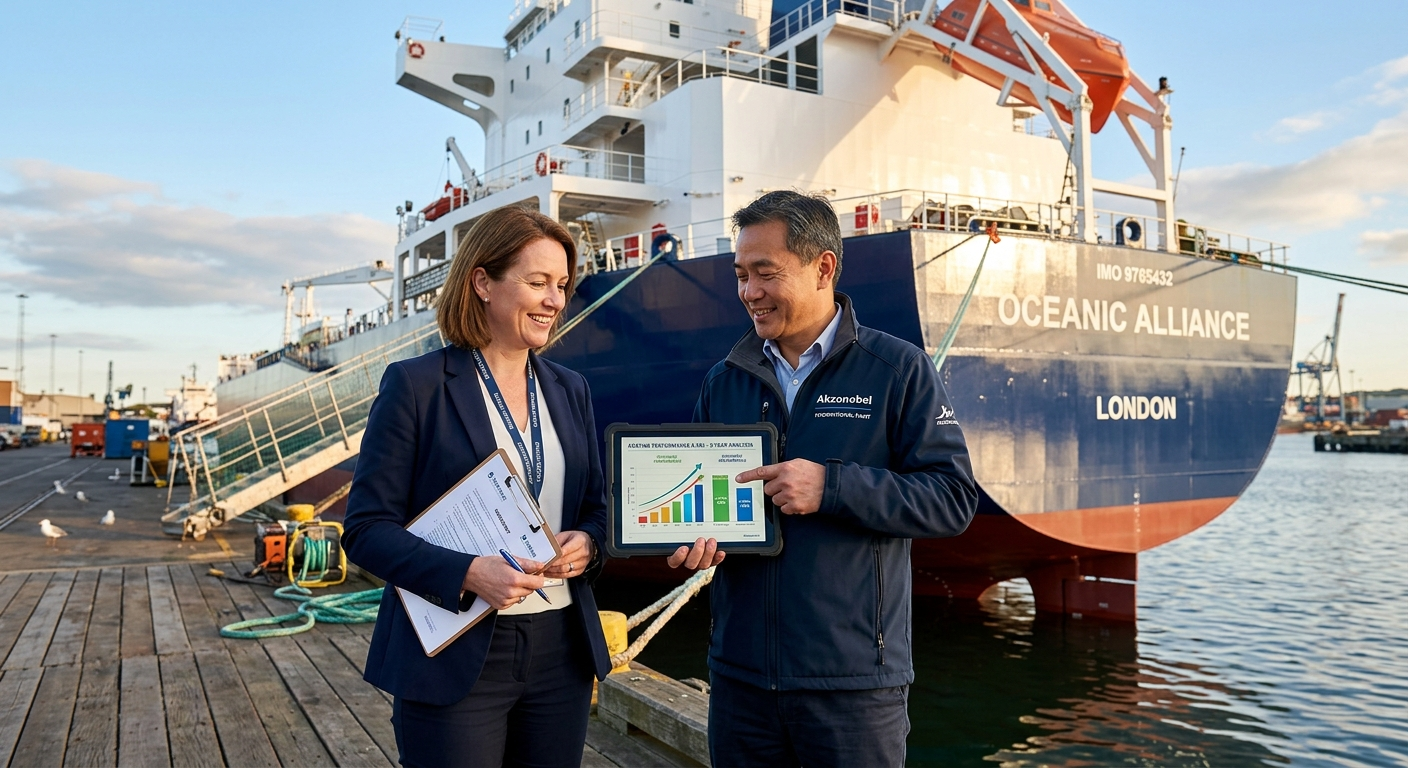
Navigating the world of marine coatings isn’t a journey you should take alone. The value of premium paint is tied to the expertise of the commercial marine paint supplier behind it.
A true partner provides more than just drums of paint. They offer technical support, detailed application guides, and system recommendations tailored to your vessel’s trading routes and operational profile. They ensure the coatings you choose are compatible and ideal for your maintenance window.
Moreover, a great supplier knows a vessel’s appearance is vital for branding and asset value. UV radiation and salt spray degrade standard paints, leading to a chalky, unprofessional look. An advanced, UV-stable topcoat like the JD918 Acrylic Polyurethane Hull Paint (Yellowing resistance) keeps your vessel looking pristine for years, protecting the steel and preserving your fleet’s reputation.
The Bottom Line 📈
Judging maritime maintenance by the initial marine paint price per liter/gallon is a trap that leads to higher operational costs. True financial efficiency demands a holistic view.
By calculating the total cost of ownership, prioritizing dry-docking cost reduction, and leveraging fuel efficiency coatings, you can turn paint procurement from a simple expense into a strategic, money-saving investment. Remember: the most expensive paint you can buy is the one that fails too soon.