“`html
Future-Proof Your Fleet: The Ultimate Newbuild Coatings Guide
The launch of a newbuild vessel is a landmark event, but its long-term profitability and operational lifespan are determined long before it hits the water. The deciding factor? The coating system. This choice goes beyond aesthetics; it’s a strategic decision involving chemistry, compliance, and cost-effectiveness. Understanding how to choose coatings for new shipbuilding is fundamental to safeguarding your asset for decades to come.
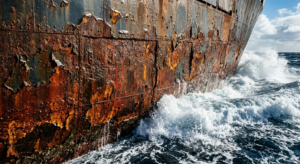
A vessel is in a constant battle with its environment. Corrosive saltwater, abrasive cargo, UV radiation, and biofouling all work to degrade its steel structure. The coating system is the primary line of defense. A subpar system guarantees premature corrosion, expensive repairs, and extended downtime. In contrast, a high-performance system protects the vessel, boosts efficiency, ensures regulatory compliance, and delivers a powerful return on investment. This guide outlines the essential factors for selecting the ideal coating system for your newbuild.
The Foundation of Durability: Corrosion Protection and Surface Preparation
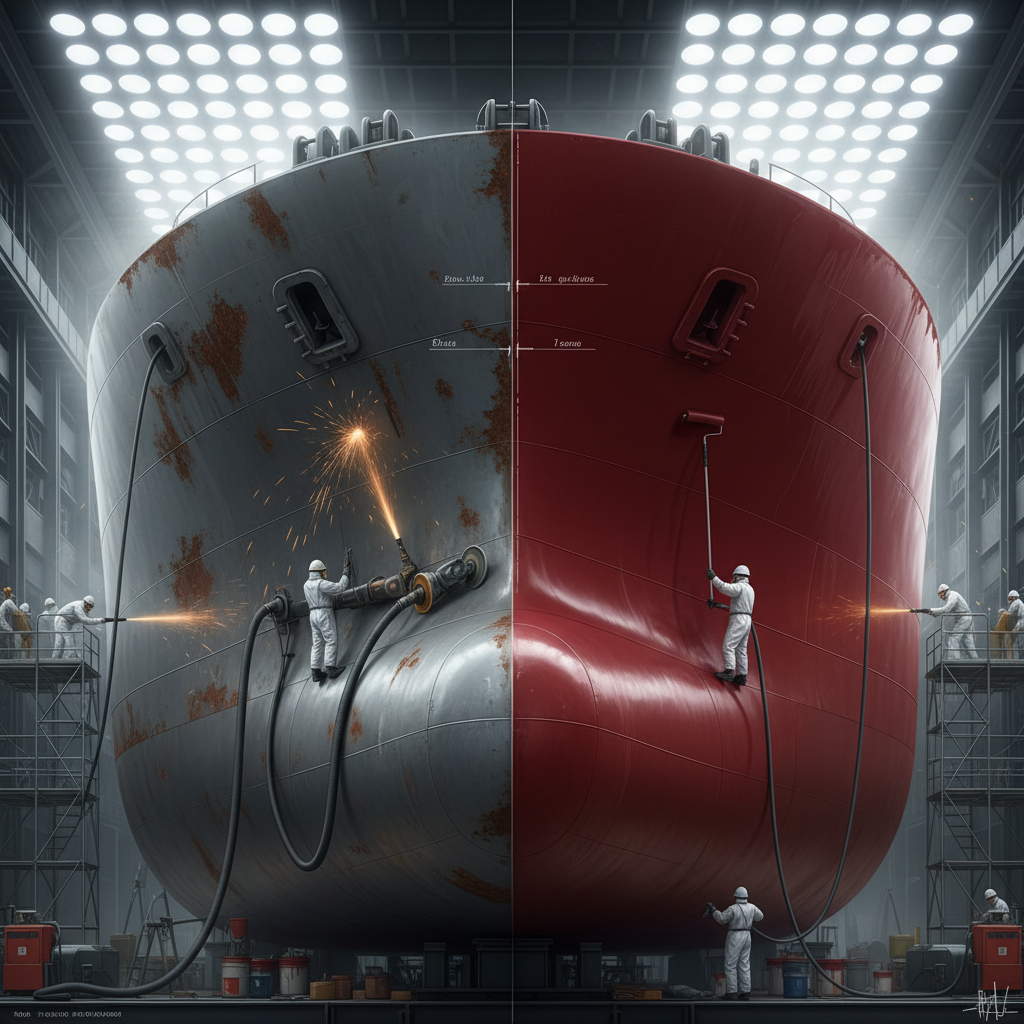
Before considering advanced topcoats, we must focus on the bedrock of any marine coating system: corrosion protection. Steel’s natural tendency is to rust. A coating’s primary function is to create an impermeable barrier against the harsh marine environment.
Why Surface Preparation is Non-Negotiable
The most advanced coating will fail if applied to a poorly prepared surface. Proper surface preparation is the single most critical factor for the longevity of a coating system, ensuring maximum adhesion by removing contaminants like salt, oil, and mill scale. The industry benchmark for newbuilds, Sa 2.5, removes at least 95% of contaminants. Adhering to these strict surface preparation standards is not a corner to be cut; it is the foundation of the entire protective system.
The First Line of Defense: High-Performance Primers
The primer is the first coat applied to prepared steel, providing adhesion and crucial anti-corrosive properties. Different areas require specific primers:
- Alkyd Anti-Rust Primers: A traditional, reliable choice for less aggressive environments like certain interior spaces. Our JDC53-31 Red Lead Alkyd Anti-Rust Paint provides excellent rust inhibition and is easy to apply.
- Epoxy Primers: The gold standard for areas demanding superior durability and chemical resistance, such as underwater hulls, cargo holds, and ballast tanks. A JDH06-4 Epoxy Zinc-Rich Anti-Rust Primer offers exceptional cathodic protection, where zinc sacrificially protects the steel. For challenging surfaces, a JDH818 Rough Surface Epoxy Primer is engineered for complete coverage and adhesion.
Navigating Marine Paint Specifications and Regulations
Choosing a coating is a technical and legal decision. The maritime industry is governed by complex maritime industry regulations designed to ensure safety and environmental stewardship.
IMO PSPC: The Global Standard
The IMO’s Performance Standard for Protective Coatings (PSPC) is a critical regulation for newbuilds. It sets strict requirements for ballast tank coatings and cargo oil tanks, areas prone to intense corrosion. The PSPC mandates specific surface preparation, coating thickness (320 µm DFT minimum), application, and inspection protocols. Only pre-qualified, certified systems are permitted, making IMO PSPC type approval a non-negotiable requirement for these critical areas.
Understanding Marine Paint Specifications
Every coating’s technical data sheet (TDS) details its marine paint specifications. Mastering these is vital for comparing products and planning the shipyard application process. Key parameters include:
- Volume Solids: The percentage of paint remaining after solvents evaporate. Higher solids mean less paint is needed to achieve the required thickness.
- Recommended DFT: The manufacturer’s specified dry film thickness for optimal performance.
- Drying and Curing Times: Dictates overcoating intervals and launch time, varying with temperature and humidity.
- Pot Life: The workable time for two-component coatings after mixing.
From Protection to Performance: Fuel Efficiency and Lifecycle Costs
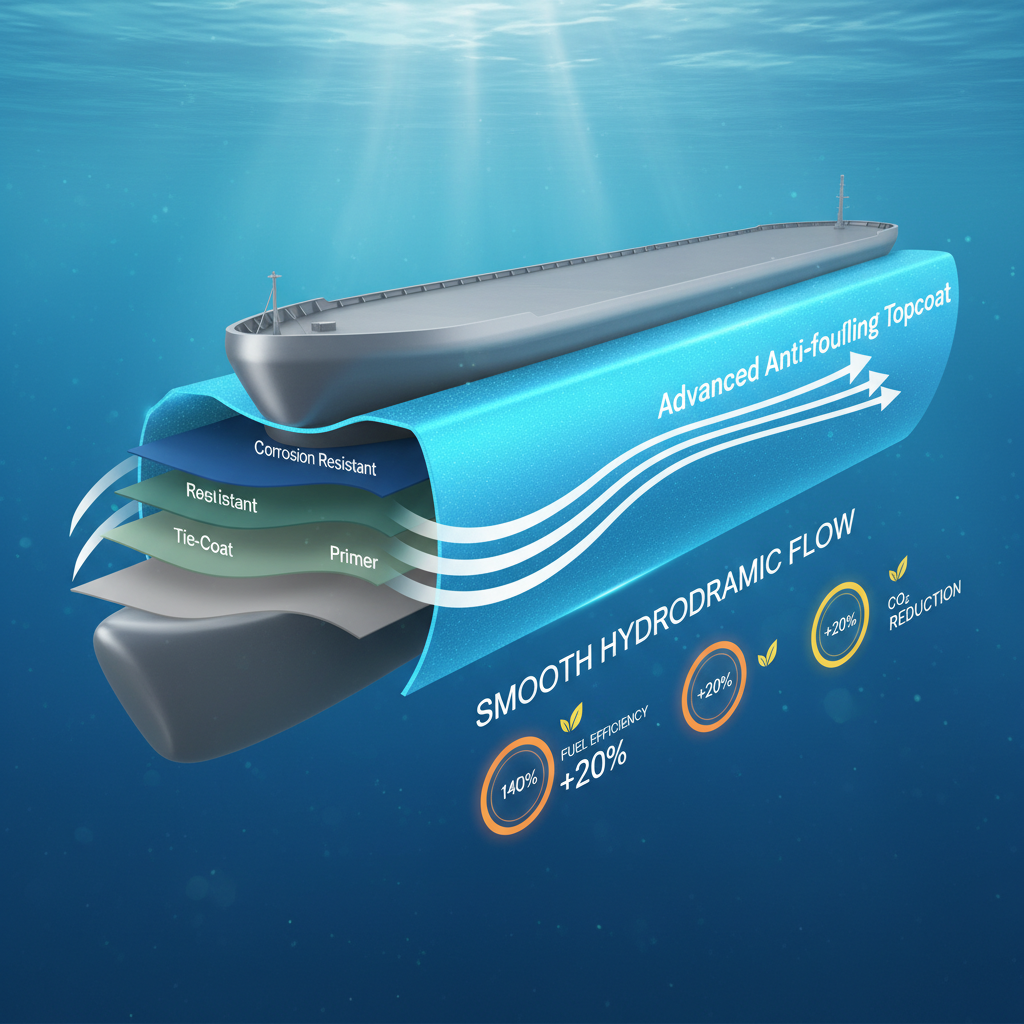
Modern coatings do more than prevent rust; they are a key tool for vessel performance management, directly impacting fuel consumption.
The Advantage of a Smooth Hull: Anti-Fouling Systems
Biofouling—the buildup of marine life on the hull—creates significant hydrodynamic drag, which can increase fuel use by over 10%. Advanced anti-fouling systems are an investment with a swift payback.
- Self-Polishing Copolymers (SPCs): These coatings use the vessel’s movement to slowly polish away, releasing biocides and creating a constantly smooth surface that deters fouling. Our JD753 Tin-free self-polishing antifouling paint offers long-term protection without the environmental hazards of older tin-based paints.
- Foul-Release Coatings: These biocide-free, low-friction surfaces prevent organisms from attaching firmly, allowing water flow to wash them away.
By choosing an effective anti-fouling system, you are investing in a fuel saving coating, reducing both operational costs and your carbon footprint. 🚢
Calculating the True Cost: Coating Lifecycle Cost Analysis
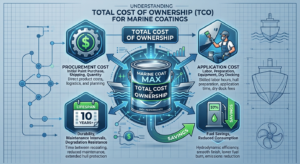
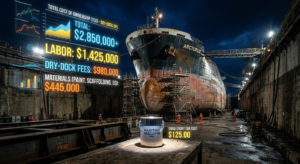
The cheapest paint is rarely the most cost-effective solution. A core principle in how to choose coatings for new shipbuilding is the coating lifecycle cost. This analysis considers all costs over a set period, including materials, application, maintenance, and indirect factors like fuel savings or lost revenue from downtime.
A premium system like our JD918 Acrylic Polyurethane Hull Paint (Yellowing resistance) may have a higher initial cost, but its superior durability and extended service life often lead to a much lower total lifecycle cost than cheaper alternatives that require frequent repainting.
The Final Step: The Shipyard Application Process
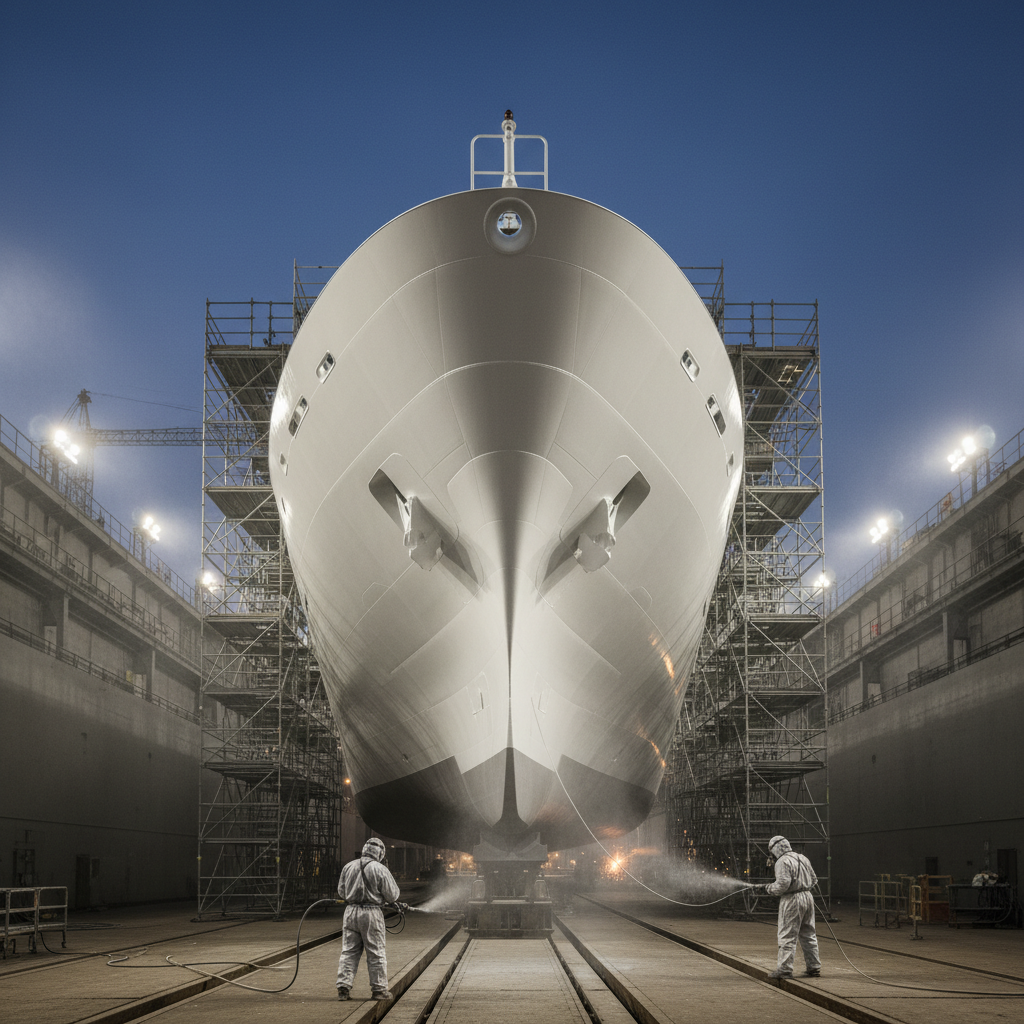
The most advanced marine paint specifications are meaningless without flawless application. The shipyard application process is where strategy becomes reality, requiring a strong partnership between the owner, yard, and paint manufacturer.
Success depends on:
- Skilled Applicators: Proper training is essential for achieving uniform film thickness.
- Environmental Control: Temperature and humidity must be within the manufacturer’s specified range.
- Quality Assurance: Certified inspectors must verify surface preparation and film thickness at every stage.
Conclusion: A Strategic Partnership for Lasting Performance
Choosing a coating system for a newbuild is a high-stakes decision. It demands a strategic approach that balances corrosion protection, regulatory compliance, and long-term performance goals. By prioritizing surface preparation, understanding paint specifications, calculating the true coating lifecycle cost, and ensuring a flawless application, you can turn your vessel’s coating into a powerful strategic asset.
Your Next Steps:
- Engage Early: Involve coating experts from the start of your newbuild project.
- Specify for the Long Haul: Choose a system designed for the vessel’s entire service life.
- Demand Quality: Partner with shipyards committed to excellence.
At JD Marine Paint, we deliver comprehensive coating solutions tailored for newbuild projects. Explore our range of high-performance products and contact our technical team to design a protective system built to last a lifetime.
“`