“`html
Antifouling Warranties: Is Your Fleet Really Covered?
For any commercial fleet operator, a vessel’s hull coating isn’t just about looks—it’s a critical component driving your operational efficiency and bottom line. Biofouling, the build-up of marine life on the hull, creates drag, sends fuel costs soaring, and can even transfer invasive species. That’s why antifouling paint is a major dry-docking investment. Manufacturers offer warranties to protect this investment, but these guarantees are rarely straightforward. Understanding the specific antifouling paint warranty terms is absolutely crucial to avoid costly surprises.
This guide cuts through the jargon. We’ll reveal what these warranties actually cover, the common loopholes that can sink your claim, and the essential steps to protect your investment. A warranty shouldn’t be a gamble; it should be a clear agreement that safeguards your vessel’s performance. Let’s dive in and arm you with the knowledge to make smarter decisions for your fleet.
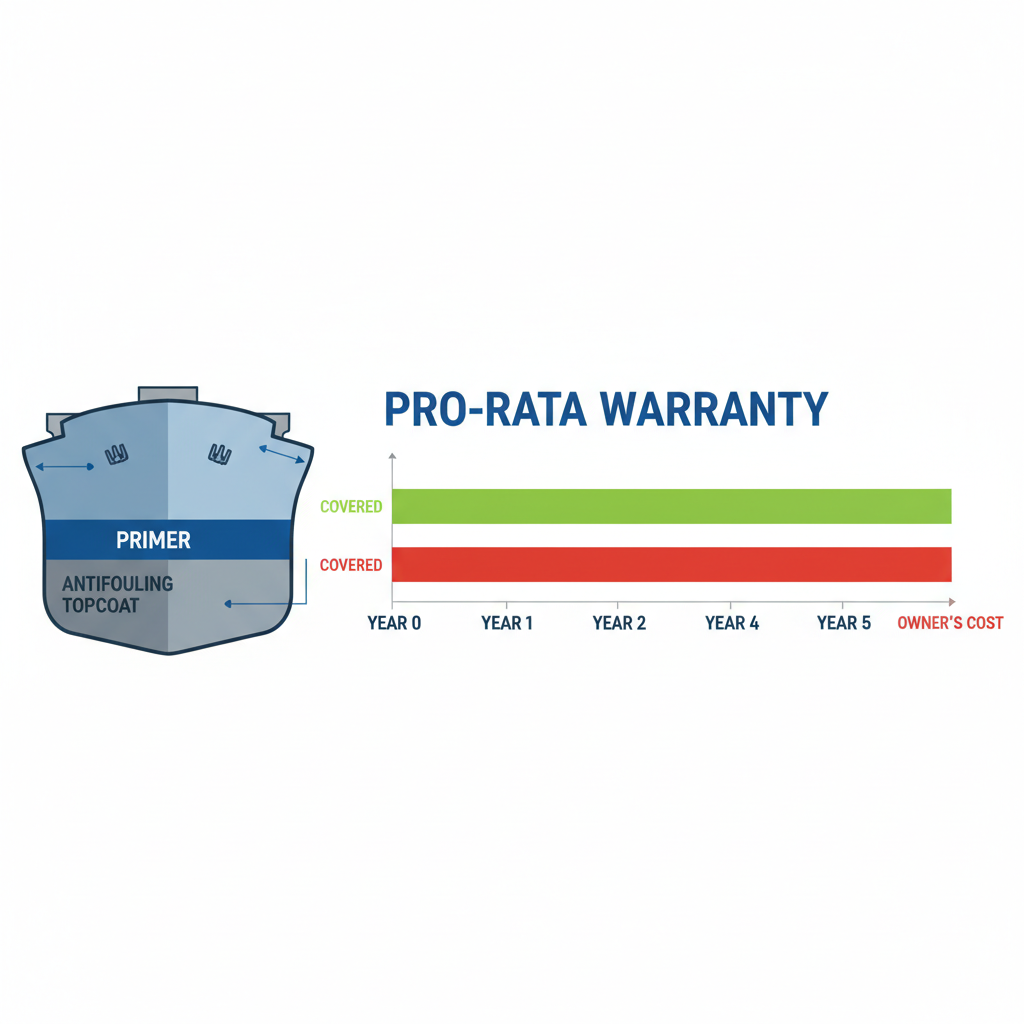
What Your Marine Coating Performance Guarantee Really Covers
A warranty is a manufacturer’s promise, but in the world of marine coatings, it’s rarely a simple money-back guarantee. To manage your expectations and assess the real value, you must understand the structure of the warranty and its implications for vessel coating liability.
The Pro-Rata System: Know the Industry Standard
The most common warranty you’ll encounter is the antifouling pro-rata warranty. This isn’t a full replacement guarantee. Instead, it offers a declining credit over the warranty’s lifespan.
Here’s how it works:
- You invest in a 5-year warranted antifouling system.
- The paint fails after 3 years (60% of its warranted life).
- After a successful claim, the manufacturer offers a credit for the remaining 40% of the original paint purchase price.
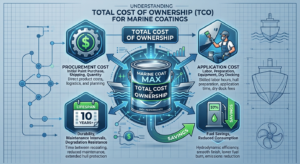
This credit can typically only be used to buy a new coating system from the same manufacturer. Crucially, it almost never covers the immense ancillary expenses involved in the paint failure claim process, like dry-docking fees, surface preparation, and re-application labor. This lack of dry-docking cost coverage is why understanding the total cost of ownership is far more critical than the warranty alone.
It’s a System, Not Just a Can of Paint
A performance guarantee applies to the entire coating system—from primer to topcoat—as specified by the manufacturer. Every layer must work in concert. This is why strict adherence to surface preparation standards is non-negotiable. A high-performance product like our JD753 Tin-free self-polishing antifouling paint can only deliver on its promise when applied over a perfectly prepared surface, like one protected by our JDC53-36 Iron Red Alkyd Anti-Rust Paint.

The Fine Print: Common Hull Paint Warranty Exclusions
A warranty is a two-way street. The manufacturer guarantees performance, but only if you meet their stringent conditions. One misstep can void the entire agreement. Here are the most common hull paint warranty exclusions every fleet manager must know.
1. Botched Surface Preparation & Application
This is the number one reason warranty claims are denied. The paint can only perform if the steel is prepared to exact specifications (e.g., Sa 2.5 near-white metal blast). Any shortcuts here are fatal to your claim.
- Key Requirements: Strict adherence to international surface preparation standards (like ISO 8501-1), correct surface profile, and total removal of contaminants.
- Application Errors: Applying paint outside recommended temperature or humidity ranges, improper mixing, or incorrect film thickness will lead to premature failure and a denied claim.
2. Using Uncertified Applicators
Most major manufacturers maintain a list of approved applicators who meet their certified applicator requirements. These contractors are trained to apply the product correctly. Using an uncertified team is a fast track to a voided warranty, as the manufacturer cannot vouch for the quality of the work.
3. Mechanical Damage
Warranties cover product defects, not damage from operations. This includes grounding, collisions with docks, anchor chain damage, or abrasion from ice. Any physical event that compromises the coating will void the warranty for that area.
4. Extreme or Unforeseen Operating Conditions
Antifouling paints are engineered for specific operational profiles. If a vessel operates outside these parameters for too long, the warranty may be voided.
- Extended Idle Time: High-performance coatings need vessel movement to activate their antifouling properties. A ship sitting idle for months in a high-fouling port may experience growth not covered by the warranty.
- Unusual Environments: Operating in freshwater when the paint is for saltwater, or in waters with extreme pollution, can fall outside the guarantee’s scope.
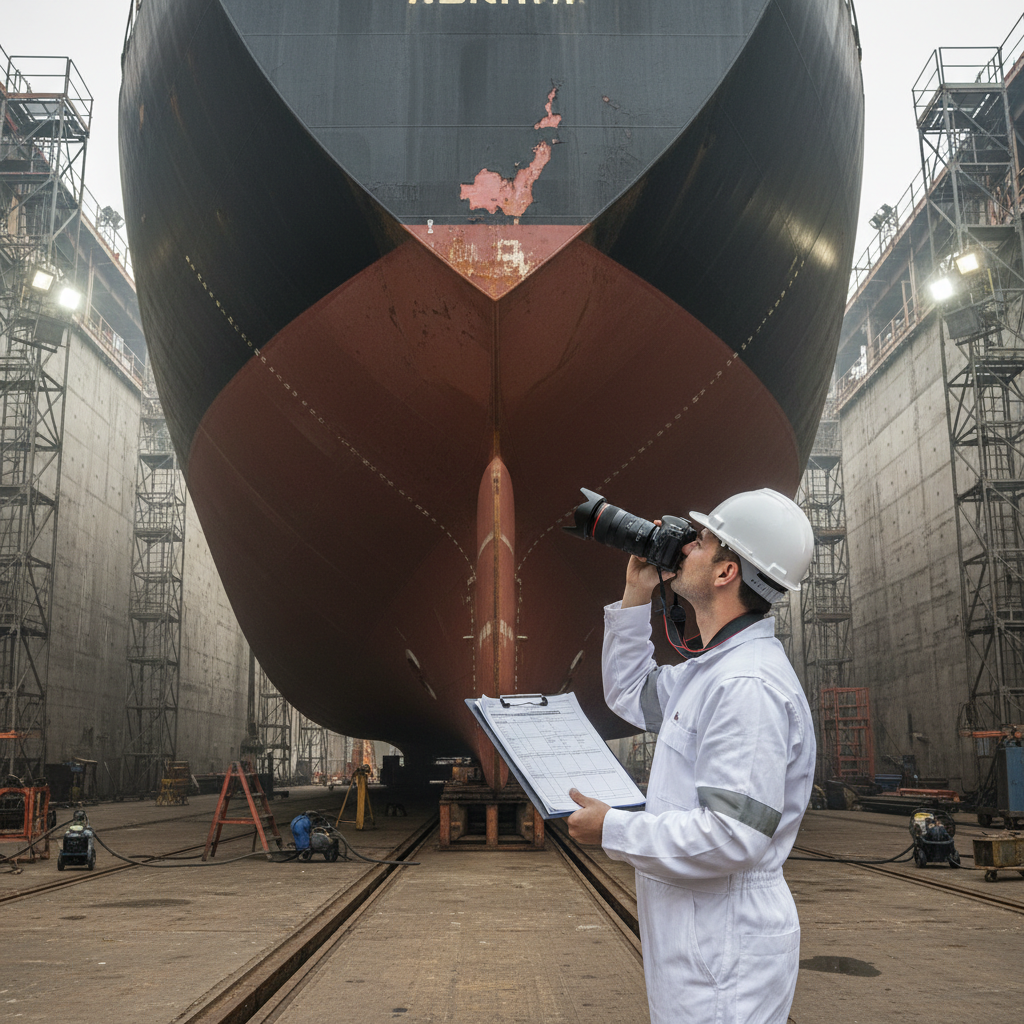
Your Action Plan for the Paint Failure Claim Process 🗺️
Suspecting premature coating failure is stressful, but a clear, systematic approach can make the paint failure claim process manageable. Here’s what to do.
Step 1: Document Everything from Day One
Your best defense is meticulous record-keeping. Act as if you will have to make a claim.
- Applicator’s Daily Reports: Collect detailed logs of surface prep, atmospheric conditions, paint batch numbers, and applied film thicknesses.
- Photos and Videos: Create a comprehensive visual library of the entire application process.
- Vessel Logs: Keep clear records of operating routes, speed, and idle time.
Step 2: Notify and Inspect Immediately
The moment you suspect a failure, notify the paint manufacturer and applicator in writing. Do not touch the coating. The manufacturer has the right to send a technical representative to inspect the hull, take samples, and investigate the failure. Your detailed records will be your most powerful tool here.
Step 3: Understand the Verdict
After the investigation, the manufacturer will issue a report. If the product is at fault, they will present a pro-rata credit offer. If the failure was due to a breach of warranty conditions, the claim will be denied with a clear, evidence-based explanation.
Beyond the Warranty: Proactive Hull Maintenance
A warranty is a safety net, but your goal should be to never use it. The best marine coating performance guarantee comes from combining superior products, expert application, and diligent commercial vessel maintenance. A proactive strategy focused on maximizing the total cost of ownership is always superior to relying on a piece of paper.
Choosing the right coating system for your vessel’s trading pattern is the most critical first step. At JD Marine Paint, we offer specialized solutions for diverse operational needs. For example, our robust JD713 Chlorinated Rubber Antifouling Paint provides reliable protection for a wide variety of vessels. Our commitment is to performance, not just promises.
Conclusion: Your Fleet’s First Line of Defense
Antifouling paint warranty terms are complex legal documents. By viewing them as conditional agreements, not unconditional guarantees, you can manage risk and make smarter decisions.
Remember these key takeaways:
- Warranties aren’t insurance: They cover product defects, not application errors or operational damage.
- Your applicator is your partner: Using a certified, reputable applicator is non-negotiable.
- Documentation is your defense: Meticulous records are your most powerful tool in a claim.
- Quality is the best guarantee: Prevent failure by investing in the right high-quality coating system from the start.
By decoding the fine print and taking a proactive approach, you can transform your antifouling coating from a potential liability into a reliable asset that boosts performance, saves fuel, and protects your bottom line.
Ready to protect your fleet with a coating system built for performance? Contact the experts at JD Marine Paint today to discuss a solution tailored to your unique operational needs.
“`