
Bulletproof Your Deck: A Guide to Non-Slip Coatings
In the high-stakes world of marine operations, your deck is ground zero. It’s where the crew works, cargo shifts, and critical tasks unfold, often in the worst weather imaginable. Here, a slip isn’t a minor mishap—it’s a potential disaster leading to serious injury, operational delays, and massive liability. That’s why choosing the right non-slip deck coating is one of the most critical decisions you’ll ever make for your vessel.
This is about more than just paint. It’s about engineering a tough, reliable surface that protects your two most valuable assets: your crew and your vessel. A high-performance coating delivers solid footing in wet, turbulent conditions while shielding your deck from the constant abuse of saltwater, UV rays, and heavy equipment. This guide will arm you with the knowledge to select the perfect anti-skid marine paint, guaranteeing long-term durability and unshakeable safety on board. 🚢

Why a High-Quality Non-Slip Deck Coating is Non-Negotiable
Your vessel’s deck is its first line of defense. A superior non-slip deck coating performs two critical functions: it keeps your people safe and preserves the ship’s structural integrity.
Protect Your People
The number one reason to apply a specialized deck coating is safety. Slips, trips, and falls are a leading cause of workplace injuries, and on a moving, wet vessel, that risk is amplified. A proper commercial boat deck coating creates a high-traction surface that slashes the risk of accidents. This isn’t just a best practice; it’s your fundamental duty. The right marine safety flooring can be the difference between a routine voyage and a medical emergency.
Shield Your Asset
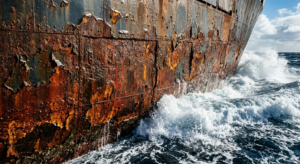
Beyond safety, the coating is a crucial shield against the elements. The marine environment is brutal and unforgiving. A system with high coating durability:
- Stops Corrosion: It seals steel decks from saltwater and moisture, preventing rust and structural decay before they start.
- Resists Damage: Decks are battered by foot traffic, dropped gear, and cargo. A coating with high abrasion resistance protects the substrate from this constant punishment.
- Blocks UV Rays: The sun’s radiation degrades lesser paints, causing them to fail. A UV-stable topcoat preserves the deck’s protection and appearance.
Investing in a premium system is a direct investment in your vessel’s lifespan, cutting down on costly steel repairs and keeping it in service longer.
Key Factors for Choosing Your Coating
The market is flooded with options, but making the right choice is simple when you focus on the key technical factors that matter for your operation.
Coating Chemistry: Epoxy vs. Polyurethane vs. Alkyd
The coating’s formula dictates its performance. The three most common systems for marine decks are epoxies, polyurethanes, and alkyds.
- Epoxy Coatings: Unmatched for adhesion and toughness, an epoxy non-skid finish is the ideal foundation. Epoxies form a rock-hard film that bonds aggressively to properly prepared steel, offering superior anti-corrosion properties.
- Polyurethane Coatings: While epoxies are tough, they need UV protection. That’s where a polyurethane deck paint excels. Applied as a topcoat, it delivers outstanding UV resistance and color retention, ensuring your deck looks as good as it performs.
- Alkyd Coatings: Alkyds are a reliable, user-friendly, single-component option. They are cost-effective and perform well in less demanding environments or for general-purpose applications.
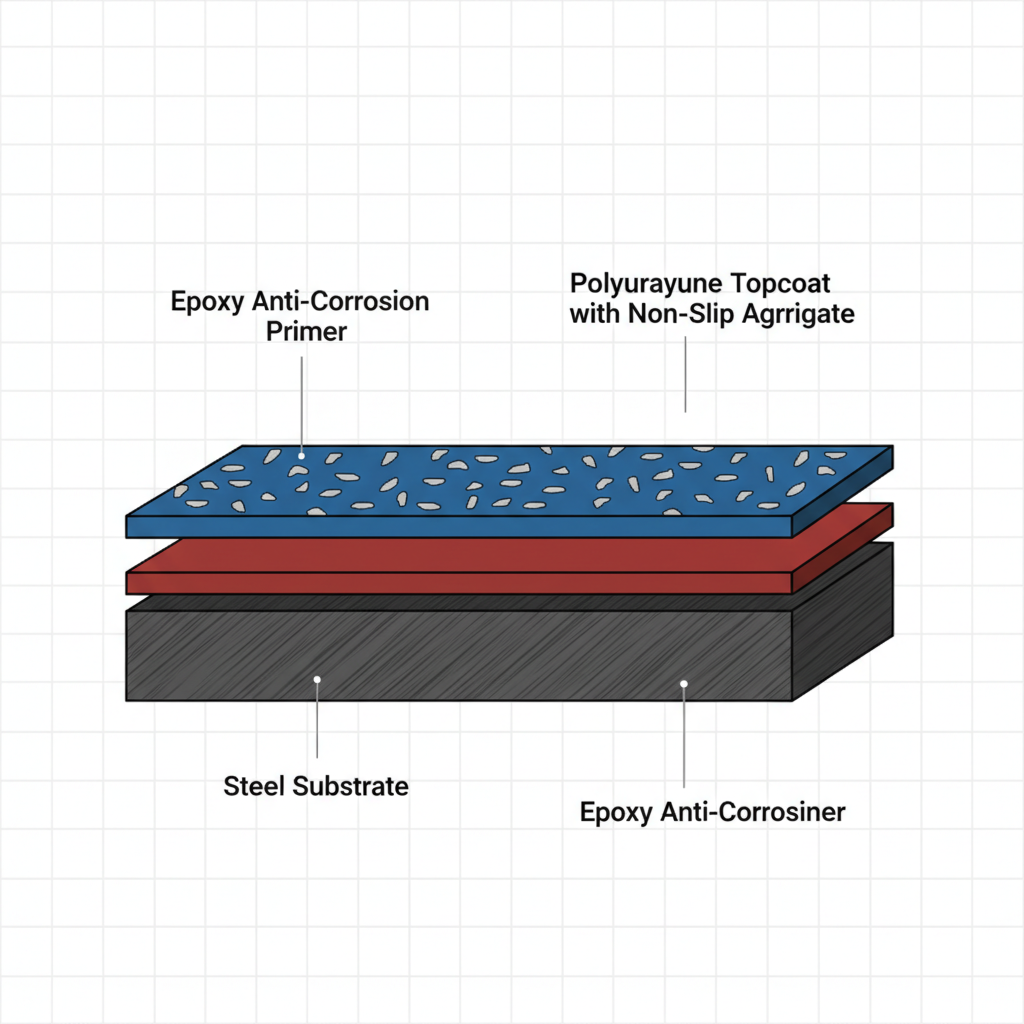
The best solution is almost always a multi-layer system: an epoxy primer for corrosion defense, followed by a polyurethane topcoat for UV stability, embedded with a non-slip aggregate.
Slip Resistance and Safety Compliance
The ‘grip’ comes from an aggregate mixed into the paint. The aggregate type and size determine the texture. Aggressive profiles are essential for high-risk work areas, while finer textures suit walkways. For commercial vessels, meeting slip resistance standards is mandatory. Depending on your class and flag state, there may be specific requirements for the coefficient of friction or even full IMO compliance. This is about both safety and regulatory approval.
The Make-or-Break Role of Deck Surface Preparation
You can buy the best coating on the planet, but it will fail without proper prep. Flawless deck surface preparation is the absolute foundation of a lasting coating system. Oil, grease, salt, or old paint will kill adhesion and lead to premature peeling and failure. Don’t cut corners.
A thorough prep job includes:
- Cleaning and Degreasing: Removing all contaminants.
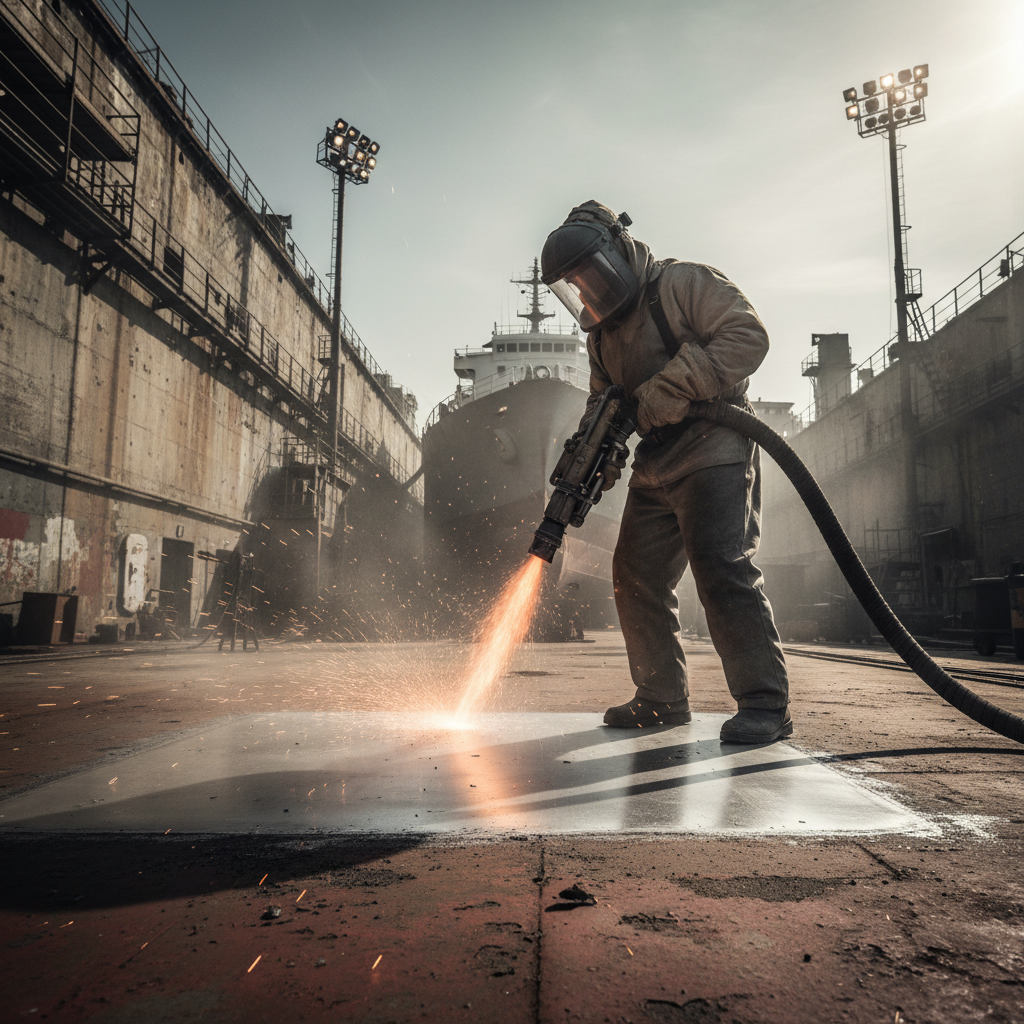
- Abrasive Blasting: Stripping old coatings and rust to create a clean, profiled surface for the primer to grip (typically Sa 2.5 near-white metal blast).
- Priming: Applying a high-quality primer immediately after blasting to stop flash rust and lock in the bond.
The time and labor you invest here will pay you back tenfold in the coating’s lifespan and performance.
Beyond Price Per Gallon: The Total Cost of Ownership
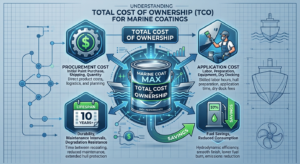
Focusing on the price per gallon is a rookie mistake. The true measure of value is the total cost of ownership (TCO), which accounts for the coating’s entire lifecycle.
TCO includes:
- Product Cost: The price of all materials.
- Labor Costs: The expense of preparation and application.
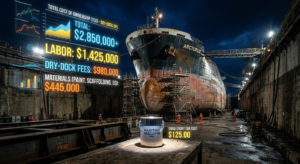
- Vessel Downtime: Every day in drydock is lost revenue.
- Coating Lifespan: This is the game-changer. A cheap coating that fails in 3 years is vastly more expensive than a premium system that lasts 7-10 years because you’ll have to repeat the entire costly process more often.
A durable, high-performance system might cost more upfront, but its extended service life and lower maintenance needs deliver a significantly lower TCO.
Conclusion: Make the Smart Choice for a Safer, Stronger Vessel
Selecting the right non-slip deck coating is a critical business decision that directly impacts crew safety, operational uptime, and your vessel’s longevity. By looking past the initial price tag and prioritizing performance, durability, and a complete system, you are making a powerful investment in your future. 👷
Key Takeaways:
- Safety is #1: Your primary goal is a high-traction surface for your crew.
- Think in Systems: Combine an epoxy primer with a polyurethane topcoat for the best results.
- Prep is Everything: The quality of your deck surface preparation determines the lifespan of your coating.
- Calculate TCO: Smart money focuses on long-term value, not short-term cost.