Maximize Fleet ROI with the Right Boat Paint System
Your Guide to Choosing the Right Boat Paint System for Your Fleet
Managing a commercial fleet is a high-stakes operation. Between tight schedules, volatile fuel prices, and the unforgiving marine environment, fleet managers are constantly navigating challenges to keep vessels safe, efficient, and profitable. Every decision impacts your bottom line, and one of the most critical is selecting the right boat paint system.
A superior coating does more than improve aesthetics; it actively safeguards your multi-million-dollar assets, lowers long-term vessel maintenance costs, and ensures peak performance. In contrast, an unsuitable coating can lead to accelerated corrosion, increased drag, and costly, unplanned downtime. If you want to maximize the lifespan and efficiency of your vessels, understanding the world of marine coatings is your first step. Let’s explore what defines a superior boat paint system and how to select the best solutions for your commercial fleet. ⚓
The Core Components of an Effective Marine Coating System
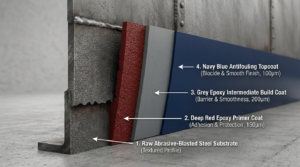
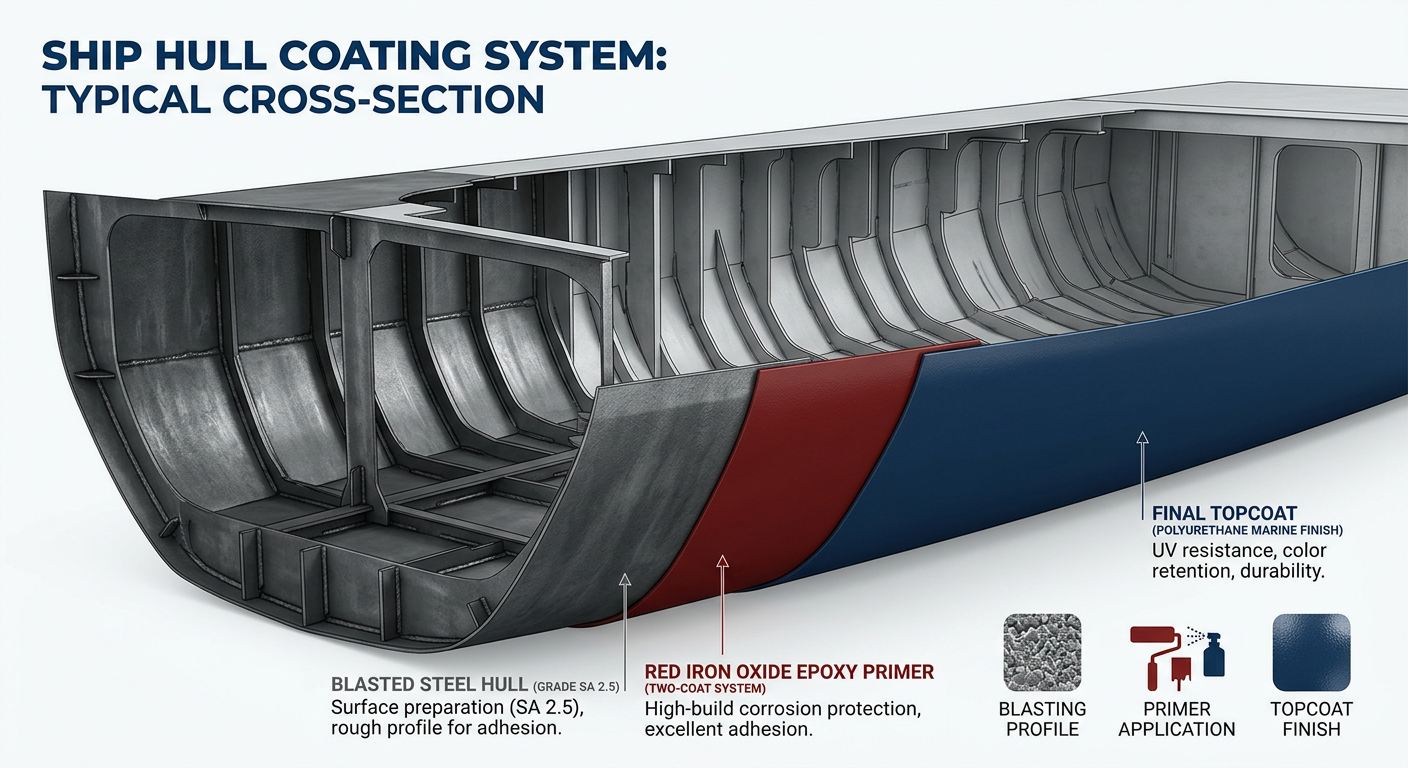
In commercial vessel painting, the idea of a one-size-fits-all solution is a costly myth. A professional boat paint system is an engineered, multi-layer barrier designed to shield steel, aluminum, or fiberglass from the relentless marine environment. True paint system durability depends on how effectively these layers work in concert.
The Non-Negotiable Role of Surface Preparation
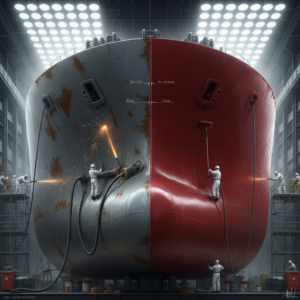
Before any paint is applied, surface preparation must be flawless. It is the absolute foundation of a successful boatyard application. Even the most advanced boat paint will fail prematurely if the hull isn’t expertly blasted, cleaned, and profiled.
For commercial vessels, this typically involves abrasive blasting to a recognized standard like SA 2.5. This process removes old paint, rust, and mill scale while creating a textured profile that allows the new coating to anchor itself to the surface. Fleet managers must also ensure environmental factors like humidity and dew point are strictly controlled during application. Cutting corners here guarantees blistering, delamination, and premature failure, which will ultimately drive up your vessel maintenance costs.
Building the Foundation: Marine Epoxy Primer
Acting as the crucial link between the bare hull and the final topcoats, a marine epoxy primer provides elite waterproofing and anti-corrosive defense. These primers form an impermeable shield that stops water and oxygen from reaching the metal substrate.
For commercial fleets, high-performance primers are essential. Different formulas offer unique advantages against corrosion:
- Sacrificial Protection: Primers rich in zinc dust act as a sacrificial anode. If the coating is scratched, the zinc corrodes first, protecting the steel hull. The JDH06-4 Epoxy Zinc-Rich Anti-Rust Primer delivers this exceptional cathodic protection, making it ideal for the most demanding environments.
- Barrier Protection: Other primers use specialized pigments to create an exceptionally dense barrier. For instance, the JDH815 Iron Oxide Red Epoxy Primer provides outstanding adhesion and rust prevention, creating the perfect foundation for a durable, long-lasting system.
Below the Waterline: Bottom Paint and Antifouling Solutions
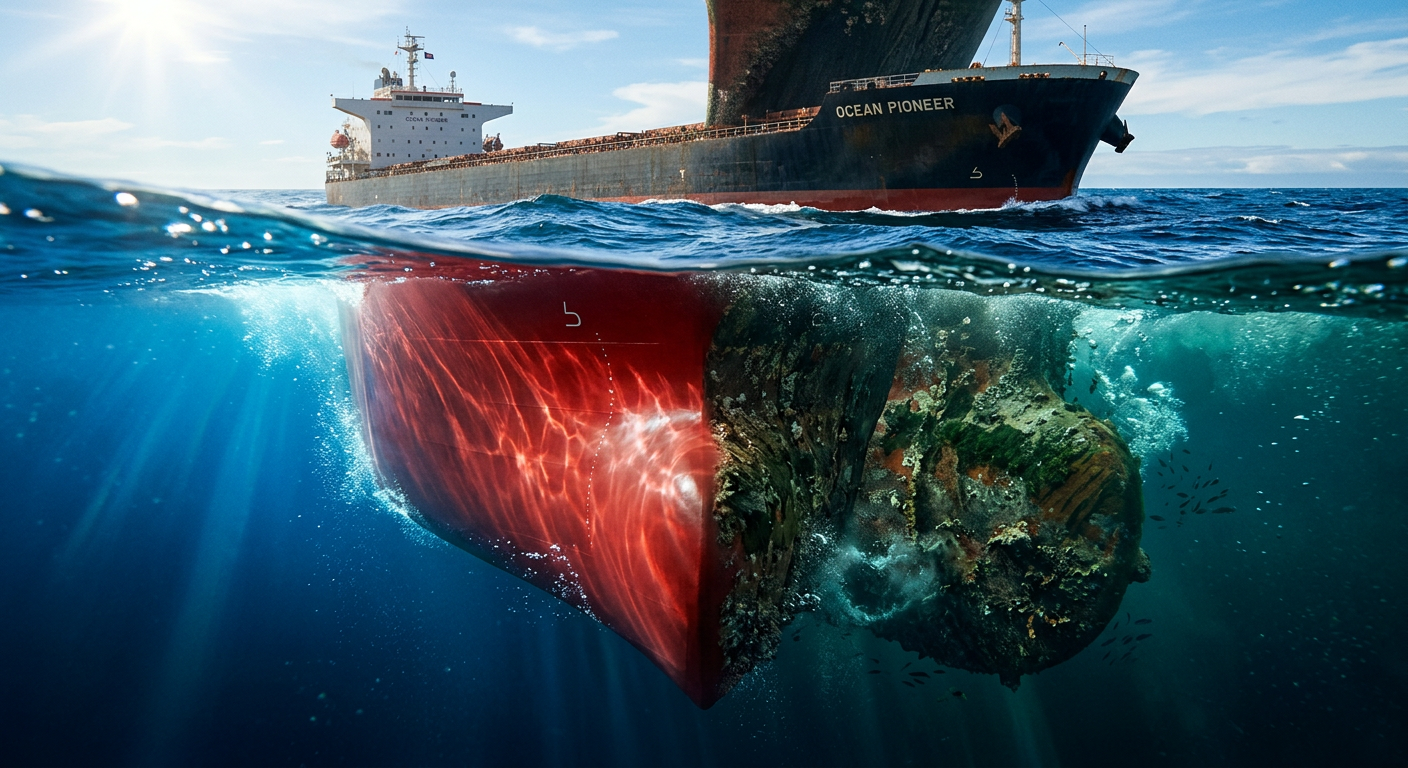
The hull below the waterline is under constant assault from marine organisms like barnacles, algae, and slime. This is where bottom paint—specifically antifouling paint—is a critical operational tool, not just a protective layer.
The Financial Drain of Biofouling
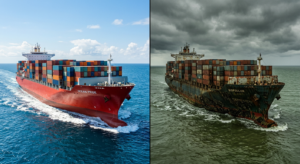
Even a thin layer of slime can dramatically increase a vessel’s hydrodynamic drag. Barnacles and weeds are even more detrimental. This added resistance forces the engines to work harder to maintain speed, leading to a direct and significant increase in fuel consumption. As fuel is often the largest operating expense for a fleet, maintaining a smooth hull is a financial imperative.
Ablative vs. Hard Paint
When choosing a bottom paint for commercial use, the debate often comes down to ablative vs hard paint:
- Ablative Antifouling Paint: Also known as self-polishing, this coating is designed to wear away slowly as the vessel moves. This action continuously exposes fresh biocides for consistent protection. This type of boat paint is often preferred for active fleets.
- Hard Antifouling Paint: This option creates a tough, porous film that releases biocides over time but doesn’t wear away. It’s a solid choice for faster vessels, those operating in high-abrasion areas like icy waters, or vessels that remain idle for extended periods.
Navigating Environmental Compliance
Today’s maritime industry demands strict environmental compliance. Global regulations on the types and release rates of biocides are constantly evolving. Selecting an effective, eco-friendly antifouling paint is crucial for avoiding hefty fines and port restrictions.
The JD753 Tin-free self-polishing antifouling paint is a superior, compliant solution for commercial operators. By slowly polishing away, it provides a consistently smooth surface that reduces drag and improves fuel efficiency while adhering to modern environmental standards.
Above the Waterline: Durability and Aesthetics
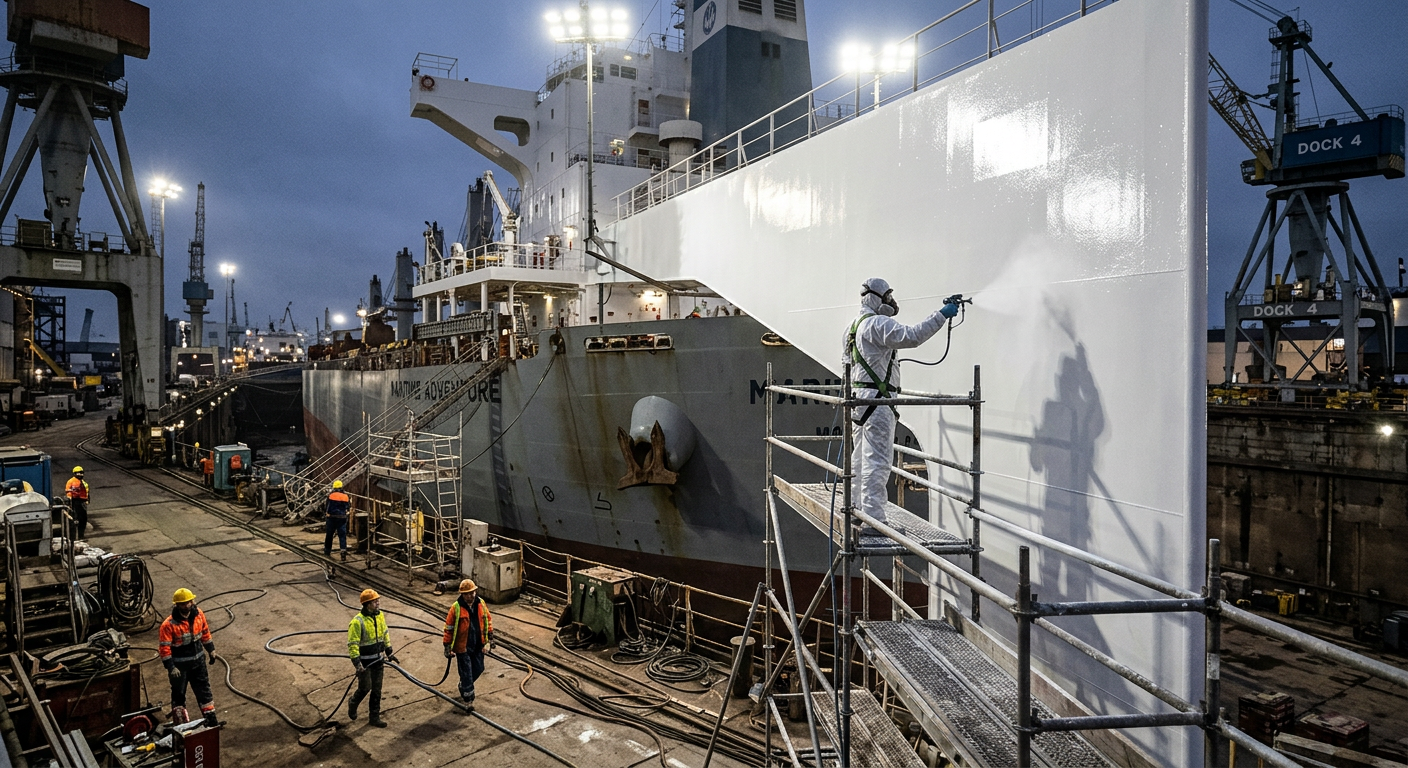
While the hull bottom battles marine growth, the topsides, decks, and superstructures face a different set of adversaries: UV radiation, salt spray, extreme temperature shifts, and physical abrasion.
Topsides boat paint must deliver both extreme durability and long-term color retention. For commercial vessel painting above the waterline, advanced polyurethanes, acrylics, or fluorocarbons are the standard. These coatings are engineered to resist fading, chalking, and scratching.
Aesthetics also play a key role. A clean, well-maintained vessel reflects positively on your company’s brand, projecting professionalism and reliability. It also boosts crew morale and promotes a culture of proper maintenance.
For hull topsides and superstructures, the JD918 Acrylic Polyurethane Hull Paint (Yellowing resistance) provides a high-gloss, exceptionally durable finish. Its specialized yellowing resistance ensures that even light-colored vessels maintain a pristine appearance after years of sun exposure, dramatically improving overall paint system durability and reducing cosmetic upkeep.

The Economics of Boat Paint: Slashing Vessel Maintenance Costs
While premium marine coatings require a higher initial investment, their return on investment (ROI) over a dry-dock cycle is clear. A high-quality boat paint system reduces overall vessel maintenance costs in several key ways:
- Extended Dry-Dock Intervals: High-performance coatings can safely extend the time between mandatory dry-dockings. Fewer trips to the shipyard mean less downtime and significant savings on yard fees and lost revenue.
- Maximized Fuel Efficiency: A smooth, fouling-free hull leads to massive fuel savings. Across an entire fleet, even a 3-5% improvement in fuel efficiency represents a monumental financial gain that more than justifies the premium paint investment.
- Minimized Structural Repairs: An effective marine epoxy primer prevents rust from compromising steel plating. This helps fleets avoid costly steel renewal and welding repairs during a boatyard application and inspection.
Actionable Steps for Fleet Managers:
- Assess Your Operational Profile: Analyze your fleet’s average speed, idle time, and typical water temperatures and regions.
- Prioritize Surface Preparation: Never compromise on the blasting and preparation phase. The coating is only as good as the surface it adheres to.
- Consult with Coating Experts: Partner with trusted manufacturers to develop a coating system tailored to your fleet’s specific needs.
- Document and Monitor: Keep detailed records of the boat paint products applied, batch numbers, and application conditions to inform data-driven decisions for future dry-dockings.
Conclusion: Your Next Steps
In the competitive world of commercial marine operations, your boat paint system is a critical operational asset, not just a cosmetic choice. By understanding the nuances of marine coatings, from the importance of a quality marine epoxy primer to the differences between ablative vs hard paint, you can make strategic decisions that enhance your fleet’s performance and longevity. 🌊
Investing in proper surface preparation, compliant antifouling technology, and top-tier products guarantees maximum paint system durability. By treating your commercial vessel painting as a long-term strategic investment, you will significantly lower your vessel maintenance costs and keep your fleet sailing profitably for years to come.