Is Polyurethane Marine Paint the Ultimate Shield for Your Vessel?
Is your boat’s finish fading, chipping, or battling the harsh marine environment? Don’t let your investment deteriorate; discover the power of polyurethane marine paint! This guide unveils everything you need to know about achieving a durable, beautiful, and long-lasting finish for your vessel.
Polyurethane marine paint offers unparalleled durability, exceptional UV resistance, and a stunning high-gloss finish, making it the top choice for protecting your boat from the relentless challenges of the marine environment. Unlike traditional coatings, marine polyurethane paint forms a hard, resilient barrier that resists abrasion, chemicals, and the damaging effects of saltwater and sun. This guide will equip you with the knowledge to make an informed decision, ensuring your boat remains pristine and protected for years to come.

Ready to transform your vessel and give it the protection it deserves? Let’s dive into what makes polyurethane marine paint the superior choice for marine applications.
What Makes Polyurethane Marine Paint Superior to Other Coatings?
Are you tired of constantly repainting or dealing with finishes that quickly break down under harsh marine conditions? The underlying chemistry of polyurethane marine paint is its secret weapon, creating a formidable barrier that truly sets it apart from traditional options.
Polyurethane marine paint is a specific organic polymer coating renowned for its exceptional durability, flexibility, and resistance to environmental degradation. Its superiority stems from its robust chemical structure, formed by the reaction of an isocyanate and a polyol. This creates strong, interlinking polymer chains, resulting in a dense, hard, yet flexible film. This structure provides outstanding abrasion resistance, superior UV protection, and resilience against chemicals like fuel and oil, far surpassing many other marine coatings.

Understanding the unique advantages of polyurethane coatings is crucial when choosing the right protection for your boat.
Defining Polyurethane Coatings: The Chemistry Behind its Strength
At its core, polyurethane marine paint derives its strength from urethane linkages formed during curing. These create an incredibly tough, tightly woven molecular matrix, providing superior adhesion, hardness without brittleness, and elasticity to withstand the constant flexing of a boat.
Polyurethane Marine Paint vs. Other Marine Coatings: A Comparative Look
When considering boat polyurethane paint against alternatives like epoxies or alkyds, the differences become striking.
- Epoxy Primers: While epoxy primers offer excellent adhesion and corrosion protection, they are less flexible and susceptible to UV degradation, making them unsuitable as a final topcoat.
- Alkyd Paints: JDC42-32 Alkyd Deck Paint are easier to apply and less expensive but offer significantly lower durability, UV resistance, and chemical resistance. They fade and chalk faster in the marine environment.
- Polyurethane Marine Paint: Our high-performance polyurethane marine paints, such as the JD908 Acrylic Polyurethane Topcoat Non-Yellowing Resistant, excel where epoxies and alkyds fall short. They provide a harder, more abrasion-resistant finish than alkyds, and vastly superior UV stability and gloss retention compared to epoxies. Your marine topcoat paint will retain its vibrant color and mirror-like sheen for years.
Key Features and Benefits of Polyurethane Marine Paint
| Feature | Benefit for Your Vessel |
|---|---|
| Exceptional Durability | Polyurethane marine paint creates a tough, hard finish that withstands constant abuse, offering unmatched abrasion resistance and scratch resistance. |
| Superior UV Resistance | Offers excellent UV resistance, preventing fade resistance and chalking paint, ensuring remarkable color retention. |
| High-Gloss Finish | Achieves a stunning, mirror-like high gloss finish that enhances your boat’s aesthetic appeal and simplifies cleaning marine paint. |
| Chemical Resistance | Forms a protective barrier against fuel, oil, saltwater, and cleaning chemicals, ensuring chemical resistance. |
| Waterproof Protection | Its dense, non-porous surface provides excellent waterproof paint properties, guarding against moisture ingress and blistering. |
How Can Polyurethane Marine Paint Unrivaled Benefits Protect Your Vessel?
Are you seeking a coating that truly stands up to the relentless abuse of the open water, protecting your investment for years to come? Polyurethane marine paint is a high-performance shield engineered to deliver exceptional durability, stunning aesthetics, and superior protection.
Polyurethane marine paint offers exceptional durability, resisting abrasion and impact for a long-lasting finish. Its superior UV resistance prevents fade resistance and maintains color retention. The stunning high-gloss finish enhances appearance while providing crucial chemical and water resistance against fuel, oil, and saltwater damage. Ease of maintenance makes keeping your vessel pristine effortless through routine cleaning marine paint best practices.

These combined benefits make polyurethane marine paint a smart choice for vessel maintenance, ensuring weather protection and a professional finish.
Exceptional Durability and Longevity of Polyurethane Marine Paint
Polyurethane marine paint creates a resilient hard finish that resists physical damage and maintains integrity against thermal expansion and contraction, preventing cracking paint and peeling paint. This marine-grade coating ensures your hull, deck paint, and topside paint remain intact.
Superior UV Resistance: Protecting Your Investment with Polyurethane Marine Paint
The sun’s UV rays are damaging. Polyurethane marine paint offers inherent UV resistance that preserves your boat’s color and gloss. Our JDmarinepaint topcoats are formulated for stability under sunlight, guaranteeing excellent fade resistance and color retention.
Stunning High-Gloss Finish: Achieving Aesthetic Perfection with Polyurethane Marine Paint
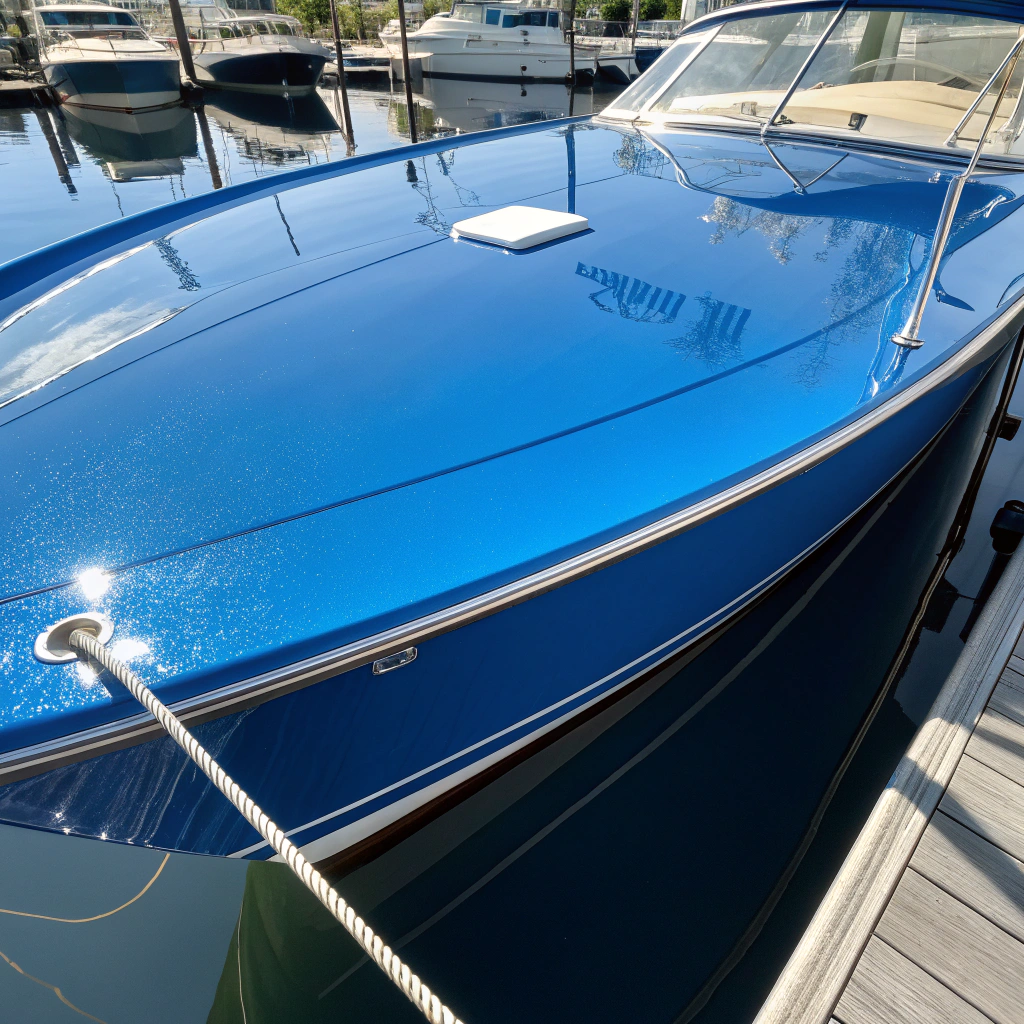
Polyurethane marine paint delivers an undeniable aesthetic advantage. Its ability to cure into a remarkably smooth, high-gloss finish is unparalleled, offering a mirror-like sheen. This flawless appearance is achievable for fiberglass boat paint or yacht painting, and also simplifies cleaning.
Chemical and Water Resistance: The Protective Barrier of Polyurethane Marine Paint
The marine environment is corrosive. Polyurethane marine paint provides exceptional chemical resistance against fuels, oils, cleaning solvents, and saltwater exposure. This robust waterproof paint barrier prevents these substances from damaging the underlying gelcoat or primer, crucial for marine environment protection.
Ease of Maintenance: Keeping Your Boat Pristine with Polyurethane Marine Paint
Polyurethane marine paint is surprisingly easy to maintain. Its smooth, hard surface repels dirt and resists staining. Regular washing with mild soap and water is often all that’s required for routine cleaning best practices, simplifying boat care.
What Types of Polyurethane Marine Paint Are Best For Your Vessel?
Confused by polyurethane marine paint options? Choosing the right formulation is critical for both the quality and durability of your vessel’s finish.
Choosing the right polyurethane marine paint formulation depends on your project’s scope and expertise. Single-part polyurethane marine paint offers simplicity for smaller tasks or DIY boat painting. Two-part polyurethane marine paint is the professional’s choice for unmatched durability, involving a precise catalyst and base system. Understanding whether a water-based or solvent-based formula is suitable also involves considering environmental impact and performance differences.
Whether tackling a quick touch-up or a full boat restoration, knowing the characteristics of each paint type will guide your decision.
Single-Part Polyurethane Marine Paint: Simplicity and Ease
Single-part polyurethane marine paint is easier to work with, requiring no precise mixing. It cures by reacting with moisture in the air, making it great for DIY boat painting or touch-ups with good UV resistance and gloss, though generally less durable than two-part options.
Two-Part Polyurethane Marine Paint: The Professional’s Choice for Unmatched Durability
For uncompromising performance, two-part polyurethane marine paint is the industry standard. Systems like our JD908 Acrylic Polyurethane Topcoat Non-Yellowing Resistant consist of a base and catalyst, mixed prior to application. This chemical reaction creates an exceptionally tough, long-lasting film with superior abrasion resistance, chemical resistance, and UV resistance. It’s preferred for hull paint, topside paint, and critical exterior surfaces on yacht painting.
Water-Based vs. Solvent-Based Polyurethane Marine Paint
The choice often comes down to performance vs. environmental impact.
- Solvent-Based: Favored for superior durability, gloss, and adhesion, with longer pot life and smoother flow, but higher VOCs requiring strong ventilation.
- Water-Based: Offers lower VOCs, easier cleanup, and reduced odor. While slightly less hard, they are an environmentally friendly choice, suitable where VOC regulations are a concern.
Is Comprehensive Surface Preparation Critical for Polyurethane Marine Paint?
Thinking about skipping surface preparation? The longevity and flawless finish of your polyurethane marine paint depend almost entirely on the meticulous preparation before a single drop of paint is applied.
Comprehensive surface preparation is critical for optimal adhesion and maximizing polyurethane marine paint durability. Proper cleaning, precise sanding, and meticulous repair ensure a strong, uniform bond, preventing blistering or peeling. Selecting and applying a compatible primer for marine paint, such as a high-quality epoxy primer like our JDH816 Grey Epoxy Primer, provides a stable foundation for the polyurethane topcoat paint, enhancing adhesion and protection.
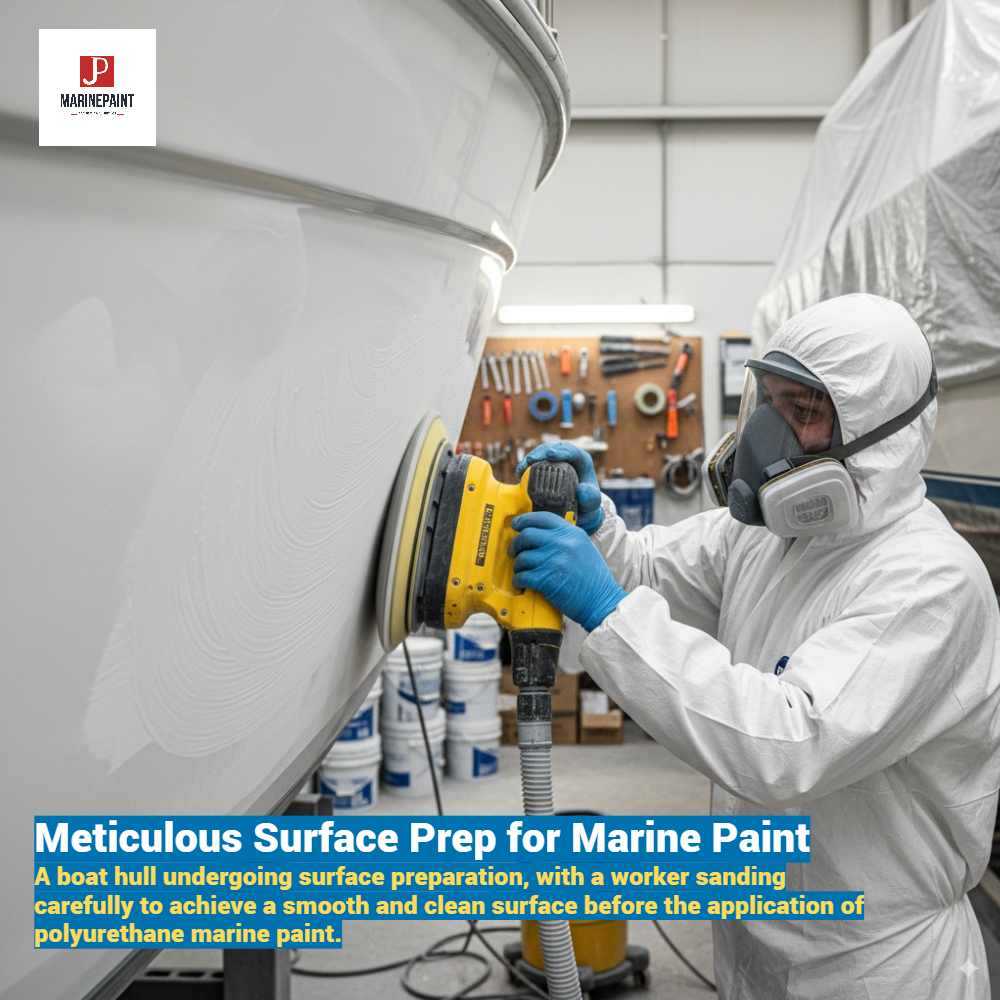
Don’t underestimate this foundational stage; it’s the cornerstone of a successful boat painting guide.
The Critical First Step: Why Preparation Is Key for Polyurethane Marine Paint
Any trace of dirt, grease, old flaking paint, or imperfections will compromise adhesion, leading to premature failure. Proper surface preparation is 80% of the job for a durable, high-quality marine coatings application.
Cleaning the Surface: Removing Contaminants for Optimal Adhesion
Begin with thorough degreasing and washing, removing all traces of oil, wax, and contaminants with a marine degreaser. Rinse with fresh water. Specialized marine cleaners can address persistent stains. This is non-negotiable for how to apply marine polyurethane correctly.
Sanding Techniques for Polyurethane Marine Paint Application
Sanding creates a mechanical profile for robust adhesion.
- For old, sound paint: Lightly sand with 220-400 grit.
- For stripping to bare substrate: Start with coarser grits (e.g., 80-120 grit), moving to finer (e.g., 220-320 grit) for smoothness.
Sand uniformly; this is vital for preventing peeling paint.
Repairing Imperfections: Filling and Fairing for a Smooth Finish
Inspect for gouges, scratches, or blistering paint. Use epoxy fillers or fairing compounds, then sand flush. A perfectly smooth substrate is essential for that desired high-gloss finish.
Priming for Success: The Importance of Compatible Primers for Polyurethane Marine Paint
A compatible primer acts as an adhesive layer, providing corrosion protection, filling minor imperfections, and creating a uniform surface. For most marine applications, a high-quality epoxy primer like our JDH06-4 Epoxy Zinc-Rich Anti-Rust Primer is recommended.
Are There Expert Application Techniques for Polyurethane Marine Paint?
Have you ever seen a beautifully painted boat and wondered how to achieve that flawless, professional finish? Applying polyurethane marine paint is an art, but with the right techniques, you can transform your vessel.
Expert application techniques are paramount for maximizing polyurethane marine paint performance and aesthetics. Optimal environmental conditions (temperature, humidity, ventilation) are crucial for a smooth cure. For two-part polyurethane marine paint, precise mixing ratios, pot life, and induction time are essential. Whether brushing and rolling or spraying polyurethane marine paint for a professional result, understanding each method, including thinning marine paint and recoating times, is key to achieving optimal film thickness and performance.
[Image Placeholder]
Image Title: Professional Application of Marine Polyurethane
Image Description: A skilled technician precisely spraying two-part polyurethane marine paint onto a boat hull in a controlled environment, highlighting the proper technique for a flawless finish.
Prompt: A professional painter wearing a full painting suit and respirator precisely spraying two-part polyurethane marine paint onto a large boat hull in a clean, well-ventilated paint booth. The spray gun is held steadily, and the paint is being applied in an even, consistent pattern, visible as a fine mist. The hull surface is smooth and free of imperfections.
Mastering these techniques is the difference between a good paint job and an exceptional one.
Environmental Conditions for Applying Polyurethane Marine Paint
The environment impacts paint cure and look.
- Temperature: Ideal range is 60-85°F (15-30°C).
- Humidity: Aim for moderate (40-70%).
- Ventilation: Essential for dispersing fumes and aiding drying, especially with solvent-based paints.
Mixing Two-Part Polyurethane Marine Paint: Precision Is Essential
For two-part paint systems, accuracy is paramount. Follow manufacturer’s instructions for mixing ratios. Allow recommended induction time (usually 15-30 minutes) and be mindful of pot life. Our JD908 Acrylic Polyurethane Topcoat Non-Yellowing Resistant specifies clear mixing guidelines.
Application Methods for Polyurethane Marine Paint:
Methods vary based on preference and skill.
Brushing and Rolling Polyurethane Marine Paint: Techniques for a Smooth Finish
Popular for DIY boat painting. Use a high-quality roller, then immediately ‘tip off’ with a fine bristle brush. Only thin marine paint if explicitly recommended by the manufacturer.
Spraying Polyurethane Marine Paint: Achieving a Professional, Flawless Result
For the ultimate professional finish, spraying is unmatched. It provides the smoothest, most uniform coat but requires specialized equipment, skill, and environmental control. Use multiple thin coats.
Multiple Coats and Recoating Times for Optimal Polyurethane Marine Paint Performance
Most polyurethane marine paint systems require multiple thin coats (2-4 are common) for optimal film thickness. Adhere strictly to the manufacturer’s recommended recoat time between coats.
Curing Polyurethane Marine Paint: What to Expect and How to Protect the Finish
Allow adequate curing time before exposing your boat to water or heavy use. While dry to touch in hours, full cure typically takes days or weeks. Protect the finish from dust and impact.
How Can You Maximize the Maintenance & Longevity of Your Polyurethane Marine Paint Finish?
You’ve applied a stunning polyurethane marine paint finish; now, how do you ensure it stays pristine and continues to protect your vessel? Proper maintenance is key to preserving that showroom shine.
To maximize polyurethane marine paint longevity, routine cleaning is essential. Regularly washing with mild, pH-neutral soaps prevents dulling buildup. Consistent inspection and prompt repair of minor damage prevent larger issues. Adhering to these maintenance tips significantly extends the life and appeal of your polyurethane marine paint.

These simple boat care steps will keep your polyurethane finish boat looking its best.
Routine Cleaning Best Practices for Polyurethane Marine Paint
Regular cleaning marine paint is your first defense. Use mild, boat-specific, pH-neutral detergents and soft brushes/sponges. Avoid abrasives. Rinse thoroughly with fresh water, especially after saltwater exposure, to prevent residue buildup.
Inspecting and Repairing Minor Damage to Polyurethane Marine Paint
Periodically inspect your paint for small nicks or chips. Even minor damage can expose the substrate, potentially leading to blistering paint or peeling paint. Promptly repair these using compatible kits.
Extending the Life of Your Polyurethane Marine Paint
- Waxing/Polishing (Optional): Applying a marine-specific wax or sealant can add UV protection and enhance gloss.
- Covering Your Boat: When not in use, covering your boat protects it from sun, bird droppings, and environmental fallout, extending paint life.
- Professional Detailing: Consider professional detailing every few years to restore gloss and deep clean.
FAQs: Your Top Questions About Polyurethane Marine Paint Answered
Still have questions about this high-performance coating? Here are some quick answers to common queries about polyurethane marine paint.
How long does polyurethane marine paint last?
With proper surface preparation and application, polyurethane marine paint can last 10-15 years or even longer, offering exceptional longevity.
Can I paint polyurethane marine paint over old paint?
Yes, often, but the old paint must be in sound condition, thoroughly cleaned, degreased, and sanded for adhesion. Always check compatibility.
Is polyurethane marine paint expensive?
While the initial marine paint cost might be higher, its superior durability, UV resistance, and long-lasting boat paint qualities often make it more cost-effective in the long run due to reduced repainting.
What is the best way to clean polyurethane marine paint?
Use mild, pH-neutral boat soap and a soft brush or sponge, followed by a thorough freshwater rinse for routine cleaning marine paint.
Is polyurethane marine paint suitable for underwater use?
No, polyurethane marine paint is generally for above-waterline use. For underwater sections, you’ll need specialized antifouling paint and appropriate epoxy primer barrier coats.
Conclusion: The Smart Choice for Enduring Marine Beauty with Polyurethane Marine Paint
Polyurethane marine paint is the ultimate choice for unparalleled durability, stunning aesthetics, and superior protection. Invest in this advanced coating for a beautiful, long-lasting vessel that truly endures the marine environment.