“`html
Boost Your Bottom Line: The B2B Guide to Marine Coating Life
In the maritime industry, efficiency isn’t just a goal—it’s the key to survival. While fleet managers track fuel consumption and crew assignments with precision, one of the most significant factors in a vessel’s long-term profitability is often miscategorized as a simple maintenance line item: its protective coating. The truth is, your choice of marine paint is a high-stakes investment that directly impacts your operational budget. Understanding the marine coating expected service life is more than a technicality; it’s the foundation for maximizing your ROI by cutting down on downtime and controlling costs.
For B2B decision-makers—fleet managers, technical superintendents, and ship owners—the conversation must evolve from the upfront price of paint to the total cost of ownership of coatings. A system that fails prematurely triggers a cascade of unplanned repairs, extended dry-dock stays, and crippling financial losses. In contrast, a high-performance coating that meets or exceeds its expected service life keeps your vessel protected, efficient, and generating revenue. This guide unpacks the essential elements of marine coating performance and durability to help you make the most of your investment.

More Than a Number: Decoding Coating Service Life
At its core, a marine coating’s service life is the timeframe it effectively protects a vessel from its environment—primarily preventing corrosion and fighting marine fouling. But this simple definition masks a complex interaction of factors that determine whether a coating lasts five years or fifteen. For strategic planning and budgeting, grasping these factors is paramount.
Why Service Life is a Critical Financial Metric
The primary objective of a superior coating system is to extend dry-docking intervals. Every day a vessel is out of the water is a day of lost revenue. By aligning your coating’s lifespan with your planned maintenance schedule, you optimize vessel availability and slash overall vessel maintenance costs.
Consider the numbers. A cheaper paint might look good on the initial invoice, but if it requires re-coating twice as often, the compounding expenses for labor, surface preparation, and dry-dock fees will dwarf those early savings. A premium system demands a larger upfront investment but delivers a far greater ROI through superior marine paint durability and a longer operational window. It’s the classic case of investing in quality to achieve significant long-term savings.
Key Factors Driving Marine Coating Durability
Achieving the maximum marine coating expected service life is a science, not a game of chance. It’s the result of meticulous planning, selection, and execution. Several critical variables separate a coating that performs flawlessly from one that fails before its time.
The Unyielding Importance of Surface Preparation
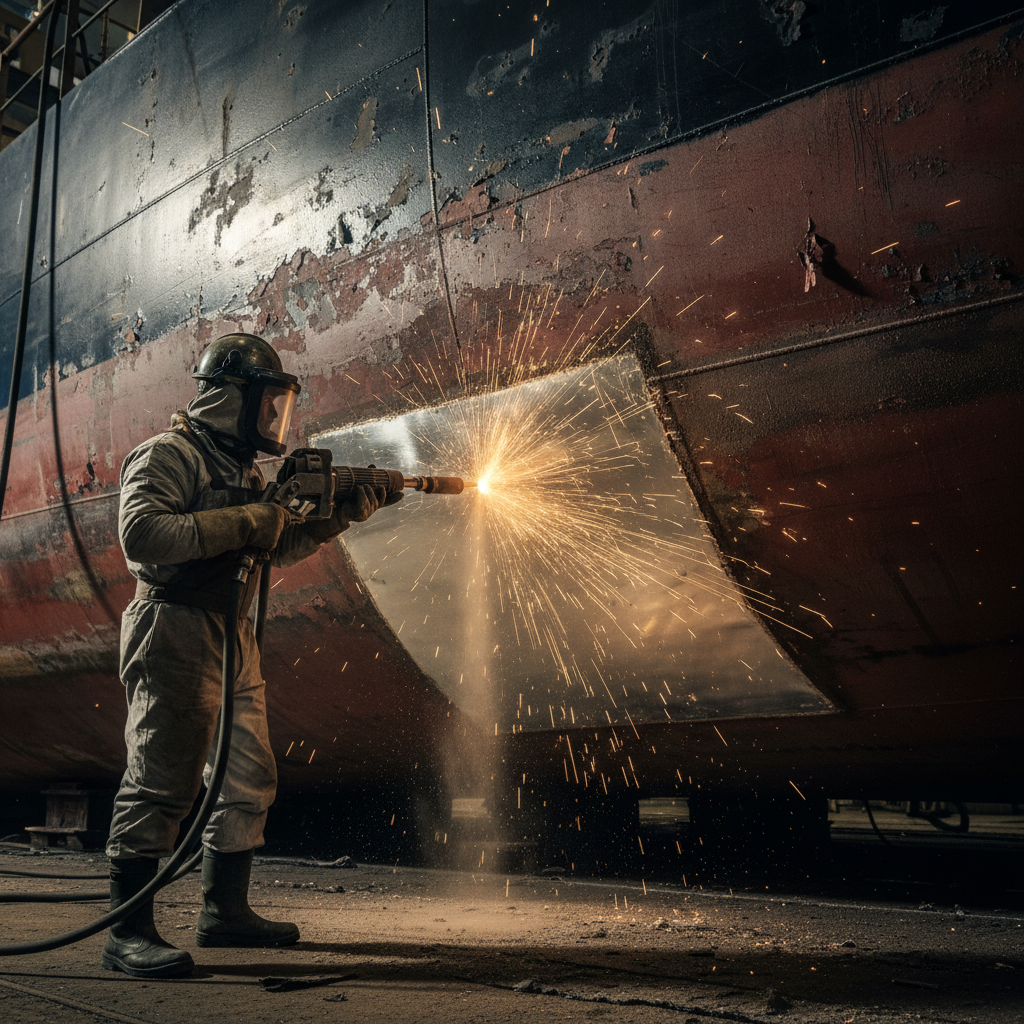
Industry experts are unanimous: over 75% of all coating failures stem from inadequate or improper surface preparation for marine paint. You can use the most advanced coating technology on the planet, but if the steel substrate isn’t perfectly cleaned, blasted, and profiled, the paint simply will not adhere as designed.
This initial stage is where long-term corrosion protection is truly forged. All rust, mill scale, old coatings, and contaminants must be eradicated to the specified standard (e.g., Sa 2½). Cutting corners here is a guaranteed path to premature failure, leading to blistering, delamination, and expensive rework.
Selecting the Right Coating System for the Job
A one-size-fits-all approach is a recipe for disaster in marine coatings. Different areas of a vessel endure vastly different stresses, each requiring a specialized solution.
- Anti-Corrosive Primers: This is your primary shield against the relentless assault of saltwater. Epoxy-based primers are the industry standard for robust protection. Products like the versatile JDC53-31 Red Lead Alkyd Anti-Rust Paint offer reliable performance. For superior cathodic protection, advanced systems like JDH06-4 Epoxy Zinc-Rich Anti-Rust Primer essentially sacrifice themselves to save the steel. In areas needing thick, tough layers, JDH815 Iron Oxide Red Epoxy Primer builds a formidable barrier.
- Antifouling Paints: Marine growth on the hull increases drag, which directly spikes fuel consumption—a major operational expense. The antifouling paint lifespan is therefore critical to your bottom line. While traditional options like JD713 Chlorinated Rubber Antifouling Paint are effective, modern self-polishing copolymers (SPCs) such as JD753 Tin-free self-polishing antifouling paint provide multi-season protection by releasing biocides at a controlled rate, ensuring a consistently smooth hull.
- Topcoats: The topcoat is the vessel’s armor against UV radiation, abrasion, and the elements, while also defining its appearance. An acrylic polyurethane topcoat like JD908 Acrylic Polyurethane Topcoat Non-Yellowing Resistant delivers excellent gloss and color retention. For the ultimate in durability and chemical resistance, a premium product like JDFT810 Fluorocarbon Topcoat can offer an exceptionally long service life.
The Influence of Environment and Operation
A vessel’s trading route and operational profile are harsh judges of its coating’s lifespan.
- High UV Exposure: Ships in tropical climates need topcoats with superior UV resistance to fight off chalking and degradation.
- Abrasive Conditions: Vessels encountering ice or navigating debris-filled ports require coatings with exceptional mechanical strength.
- Water Salinity & Temperature: Warmer, saltier waters accelerate both corrosion and biofouling, demanding a more robust coating specification.
Strategies for Extending Coating Life and Maximizing ROI
Getting your coating system to its full potential requires a proactive strategy that begins long before application and continues throughout its service life.
Adhering to International Standards
For critical areas like ballast tanks, meeting coating performance standards is non-negotiable. The International Maritime Organization’s IMO PSPC (Performance Standard for Protective Coatings) dictates stringent requirements for surface preparation, application, and inspection. Compliance not only ensures safety and regulatory approval but also engineers a coating system with a 15-year design life, dramatically reducing the need for costly mid-life repairs.
The Power of Proactive Maintenance
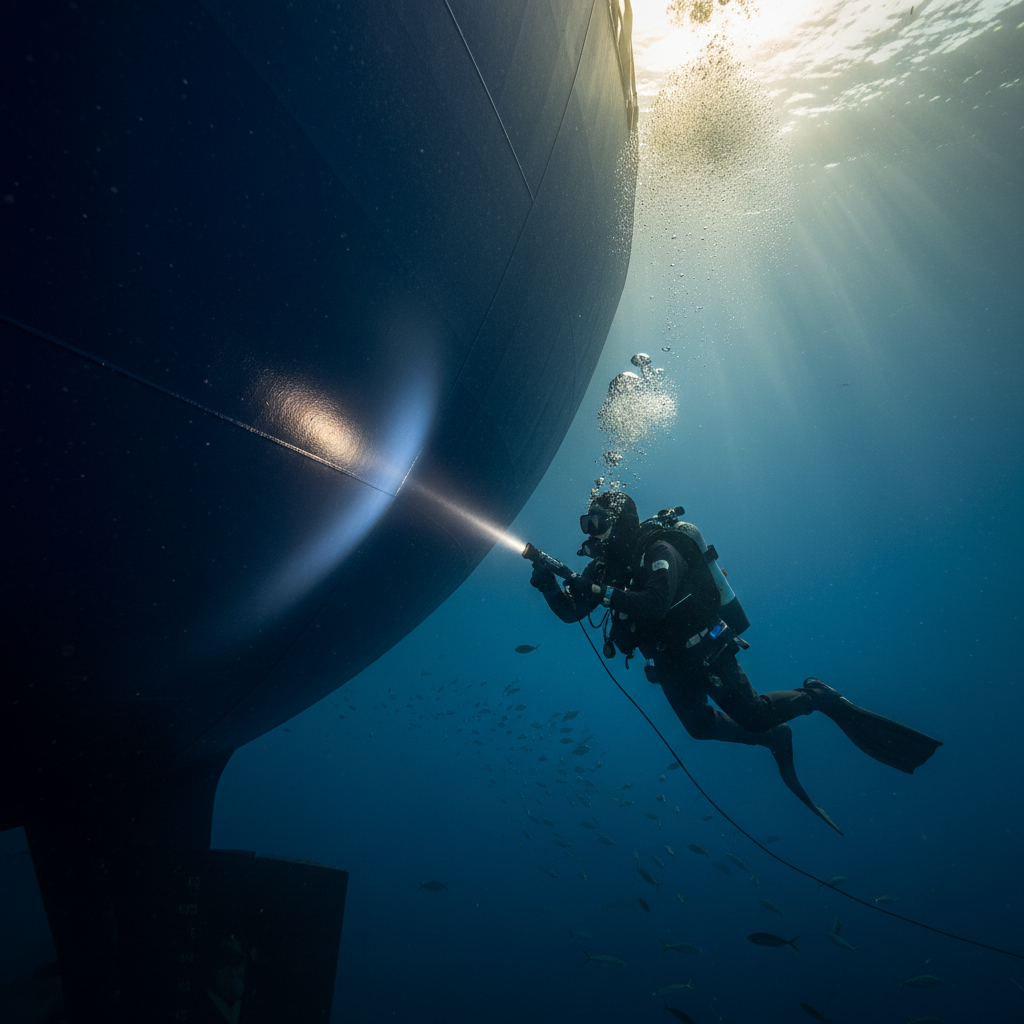
Regular inspections and timely touch-ups are fundamental for extending coating life. A small area of mechanical damage can quickly become a beachhead for corrosion that spreads unseen beneath the paint film.
- Regular Inspections: Conduct visual checks of the hull, decks, and superstructures during every port call. Look for blistering, rust stains, or physical damage.
- Prompt Repairs: Address minor damage immediately. A small stock of the original paint system on board for touch-ups can stop a small problem from becoming a crisis.
- Hull Cleaning: For antifouling systems, periodic in-water cleaning can remove slime and reactivate the coating, boosting fuel efficiency and extending its effective life.
Conclusion: Your Coating is a Revenue-Protecting Asset
Viewing your vessel’s coating as a depreciating expense is a short-sighted approach that costs money. In today’s maritime industry, it must be managed as a critical asset that directly protects your ability to generate revenue. The marine coating expected service life is the central metric of this asset’s performance.
By shifting focus from the price per liter to the total cost of ownership, you empower yourself to make smarter, more profitable decisions. This means:
- Prioritizing Flawless Surface Preparation: Never compromise on the foundation.
- Selecting the Right System: Choose high-quality, fit-for-purpose products.
- Ensuring Quality Application: Work with experienced, certified applicators.
- Implementing Proactive Maintenance: Inspect and maintain the coating to maximize its lifespan.
Adopting this strategic mindset will allow you to extend dry-docking intervals, reduce maintenance budgets, and operate your vessels with maximum efficiency and protection. Protecting your steel is protecting your investment. 🚢
Further Reading & Resources
- NACE International (now AMPP) – The global authority on corrosion control and protective coatings.
- IMO PSPC Regulations – Official information on the Performance Standard for Protective Coatings.
- Understanding Hull Roughness and Fuel Efficiency – A scientific look at how coating performance impacts operational costs.
“`